

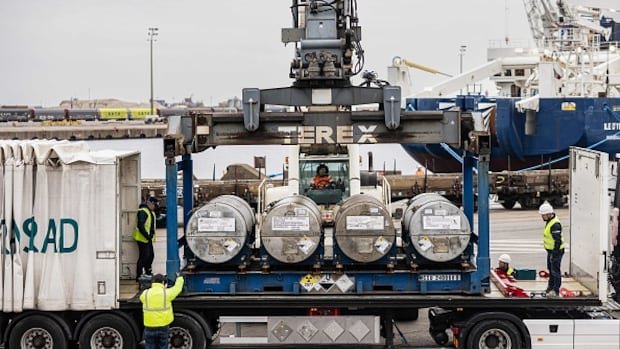

Amid the ongoing conflict in Ukraine, where Russian forces have taken control of the country’s largest nuclear plant and targeted its power infrastructure, it has come to light that Europe and the United States continue to rely on Russian nuclear fuel to operate their electricity grids.
A recent analysis of shipping data by CBC’s the fifth estate reveals that Canadian-owned Westinghouse Electric is one of the recipients of low enriched uranium (LEU) from Russia for fueling commercial nuclear reactors in the U.S.
While the U.S. took steps to ban the import of Russian enriched uranium in August 2024 to reduce dependency on Russian materials and ensure a robust domestic fuel supply, the Prohibiting Russian Uranium Imports Act allows for waivers under certain conditions until January 1, 2028.
According to a report by the Bellona Environmental Transparency Center in Lithuania, the U.S. imported 400 tonnes of low enriched uranium from Russia in 2025 alone, with major recipients including subsidiaries of nuclear companies like Framatome and Global Nuclear Fuel Americas, along with Westinghouse.
Despite the situation in Ukraine, the European Union does not have a ban on importing Russian enriched uranium, and Canada has not imposed sanctions on doing business with Russia’s Rosatom or Tenex.
Efforts are being made to reduce dependence on Russian nuclear fuel, with calls for canceling cooperation with Russia. The U.S. and Europe have long relied on Russian enriched uranium, but steps are being taken to enhance domestic production and diversify supply sources.
Westinghouse plays a significant role in the U.S. nuclear industry, with plans to invest in new reactors. While Canada’s existing CANDU reactors do not require enriched uranium, proposed new reactors may necessitate such fuel.
There are concerns about the implications of supporting Russian state nuclear entities amid the conflict in Ukraine. Calls have been made to prevent Western companies, including Canadian firms, from engaging with Russian nuclear entities to avoid strengthening Russia’s state enterprises tied to the conflict.
In a bid to support Ukraine, companies like Cameco have signed agreements for uranium supply, and Westinghouse has secured deals to supply fuel and build reactors in the country. Following a corruption scandal, key figures have been appointed to oversee Ukraine’s nuclear energy sector.
Efforts are ongoing to transition away from Russian nuclear fuel dependence and support Ukraine amid the conflict and geopolitical tensions.