

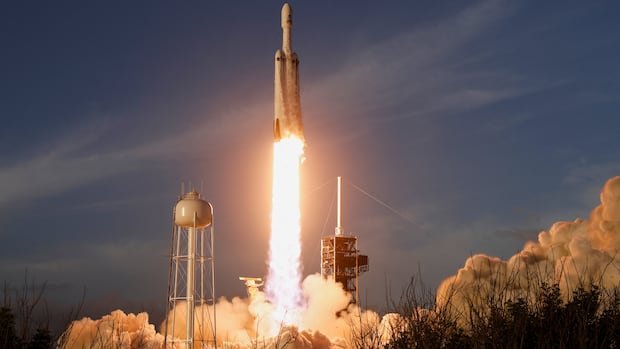

NASA has initiated a new mission to explore key mysteries in astrophysics and cosmology by launching their latest flagship astronomical observatory, the Nancy Grace Roman Space Telescope. The telescope, a refurbished spy satellite, will capture expansive views of the cosmos. Costing around $4 billion, the telescope was launched from NASA’s Kennedy Space Center in Cape Canaveral, Florida, on a SpaceX Falcon Heavy rocket. It is set for a five-year mission, but NASA mentioned the possibility of extending it for an additional five years.
The Nancy Grace Roman Space Telescope is designed to delve into cosmic puzzles like dark energy, dark matter, gravity at large scales, and the search for exoplanets outside our solar system. The observatory will be positioned in orbit beyond the moon. Originally intended for a spy satellite program by the National Reconnaissance Office, the telescope was donated to NASA in 2012 and repurposed for cosmic exploration.
Named after NASA’s first chief astronomer, Nancy Grace Roman, the telescope will journey towards Lagrange Point 2, approximately 1.6 million kilometers from Earth. Over the next 90 days, mission scientists will commission and prepare the telescope for its scientific operations. The first set of high-resolution images from the Roman telescope is anticipated before the winter holidays.
NASA Administrator Jared Isaacman expressed confidence that the Nancy Grace Roman Space Telescope will become a renowned observatory like the James Webb Space Telescope and the Hubble Space Telescope. The Roman telescope boasts similar sensitivity and vision sharpness to the Hubble but offers faster cosmic surveys. It can cover the entire Milky Way galaxy in a month, a feat that would take the Hubble a century.
The launch of the Nancy Grace Roman Space Telescope, which received Congressional support despite attempts to cancel or reduce its funding, happened ahead of schedule by nine months. This cutting-edge observatory will provide crucial insights into dark energy, dark matter, and the discovery of exoplanets, aiming to create the most detailed 3D map of the universe to date. Through its comprehensive survey, spanning over two billion galaxies, the Roman telescope aims to unravel the mysteries of the universe’s composition and evolution.