

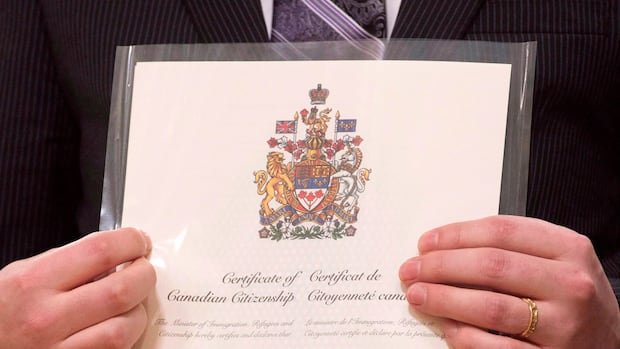

A change in federal law late last year has led to thousands of individuals worldwide receiving Canadian citizenship certificates, with half of them being Americans, according to CBC News. Immigration, Refugees and Citizenship Canada (IRCC) issued proof of citizenship certificates under citizenship by descent provisions in Bill C-3 to 4,075 individuals in the first three months since the law change.
Bill C-3 allows individuals living outside Canada who can trace their lineage back to Canadian ancestors to qualify for Canadian citizenship, even if their Canadian ancestor left the country several generations ago. This law expanded the eligibility criteria which previously only allowed citizenship by descent for the first generation born or adopted outside Canada to a Canadian citizen.
Between December 15 and March 31, the government approved 1,955 applications from individuals born in the United States, followed by 900 from Mexico and 140 from the United Kingdom. Additionally, during the same period, IRCC approved citizenship certificates for 13,310 people who qualified under the previous first-generation rules.
People from 44 countries received citizenship certificates under Bill C-3 during this timeframe, and individuals from 118 countries obtained them under the previous criteria. The surge in applications has resulted in a growing need for public records specialists and immigration lawyers to assist individuals in obtaining necessary documents and navigating the application process.
Many Americans are seeking Canadian citizenship due to various concerns, including political uncertainties in the U.S. Some are motivated by the desire for a backup plan, while others are worried about potential changes in government policies. Immigration lawyers report an increase in inquiries from individuals with possible claims to Canadian ancestry, especially those born in Quebec or Ontario.
While a citizenship certificate allows individuals to live in Canada and obtain a Canadian passport, it does not grant the right to vote in Canadian elections unless the individual has resided in Canada at some point. The potential number of individuals eligible for citizenship under the new rules is estimated to be significant, with historical migration patterns and the impact of the law change being key factors.
According to the Parliamentary Budget Officer, approximately 115,000 people could be affected by the law change. Immigration Minister Lena Metlege Diab anticipates a substantial increase in applications over time but expects limited fiscal impact as many individuals abroad are not eligible for Canadian social programs.
IRCC spokesperson Matthew Krupovich emphasized that having distant Canadian ancestry alone does not automatically qualify someone for citizenship under the new rules. Applicants born outside Canada before Bill C-3 took effect must demonstrate a parent or ancestor who was a Canadian citizen.
Despite no significant rise in application volumes since the law change, the backlog of applications awaiting processing has increased to 70,400. The processing times for proof of citizenship applications have also extended to 12 months, with potential delays for applicants with document issues or photo discrepancies.
Aside from citizenship by descent applications, the backlog includes requests for replacement certificates and certificates for individuals born in Canada. Immigration lawyers express concerns about IRCC’s capacity to handle the growing demand and the delays in processing applications.
While some applications have been expedited for urgent reasons, such as safety concerns or academic opportunities in Canada, many applicants are still awaiting responses. The uncertainty in the U.S. political landscape has prompted more Americans to explore Canadian citizenship options as a precautionary measure.