


A researcher at Mount Allison University is investigating the impact of an invasive bug and insecticides on species in old hemlock forests in southwestern Nova Scotia. The hemlock woolly adelgid (HWA) has been causing significant damage to the forests for nearly ten years. To combat its spread, various entities, including Parks Canada, the province, local organizations, and private landowners, have been using insecticides such as imidacloprid and dinotefuran.
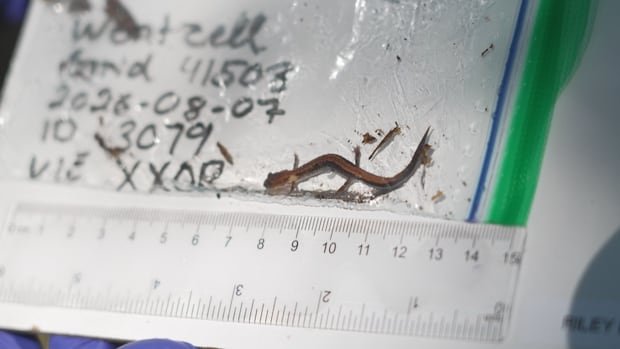
Mathilde Christjansen, a master’s student leading the study, highlighted the lack of knowledge regarding the effects of the woolly adelgid and insecticides on other species. By focusing on the eastern red-backed salamander as a bioindicator species, the research team aims to gain insights into the overall forest ecosystem health.
Coverboards were placed in the forests as habitat for salamanders, enabling scientists to monitor and measure the salamander populations. Some forests were treated with insecticides, while others were left untreated. Behavioral tests were conducted on the salamanders to assess their reactions to various stimuli.
The study also examines how dying hemlock trees impact salamanders, as these trees create unique habitats crucial for the species. The sensitive skin of salamanders requires a moist environment, making them susceptible to changes in forest conditions.
Collaborating with several institutions, including the Canadian Forest Service and Environment and Climate Change Canada, the project forms part of a broader initiative to assess forest health in Eastern Canada. The research, supervised by experts like Julia Riley and Chris Edge, will continue until next year, with data analysis underway.
The investigation aims to understand the broader implications of HWA infestation and insecticide use on forest ecosystems, particularly on salamander populations and overall forest health.