

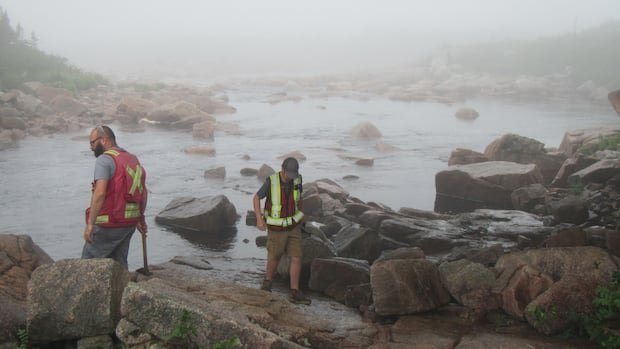

Increasingly severe wildfire seasons pose a significant public safety risk in Newfoundland and Labrador, affecting routine operations in rural and remote areas, including vital geoscience work crucial for the mining industry. Wildfires can render work sites inaccessible for safety reasons and may lead to the reassignment of aircraft meant for scientific fieldwork to aid in wildfire response efforts.
This situation adds complexity to the planning and scheduling responsibilities of scientific program directors compared to previous years. Despite these challenges, the Government of Newfoundland and Labrador managed to underspend by $321,800 on transportation for geophysical survey work for the Geological Survey of Newfoundland and Labrador in the previous year.
Energy and Mines Minister Lloyd Parrott attributed this underspending to lower-than-expected helicopter utilization, largely due to wildfires impacting availability. While scientists occasionally use drones for field programs, helicopters remain essential, especially in remote areas like Labrador.
Weather conditions, such as high winds, cloud cover, and fog, can also disrupt helicopter travel, with wildfires further exacerbating the situation. Minister Parrott confirmed that some helicopter resources supporting geoscience fieldwork were redirected to assist with wildfire containment efforts this summer, although the impact was less significant than in the 2025 wildfire season.
Despite these challenges, ongoing projects, including joint ventures with the federal government, continue in areas like southeastern Labrador and the White Bay region. The Geological Survey of Newfoundland and Labrador currently oversees ten active field projects, with a focus on both Newfoundland and Labrador regions and two planned airborne surveys using fixed-wing aircraft.
The province is experiencing record-high private spending on exploration work, with an estimated forecast of $283.3 million for the year, reflecting an increase from the previous year’s expenditure. This private investment plays a crucial role in driving economic growth in rural and remote areas of the province, attracting foreign direct investment.
Industry stakeholders are adapting to wildfire disruptions by adjusting field seasons, but projects are generally proceeding as planned. Amanda McCallum, executive director of Mining Industry N.L., emphasized the importance of public geoscience in driving industry investment and urged for more support for these efforts.
Mining, which is the second-largest contributor to Newfoundland and Labrador’s GDP, supports around 8,920 jobs, including those in exploration work. Despite some active fires in parts of central and northern Labrador, the overall wildfire risk level in the province remains low. The current year has seen fewer fires than the previous year but a larger area burned in total hectares.
In conclusion, while wildfires present challenges for geoscience work, the industry’s resilience and adaptability continue to drive economic growth and investment in Newfoundland and Labrador.