

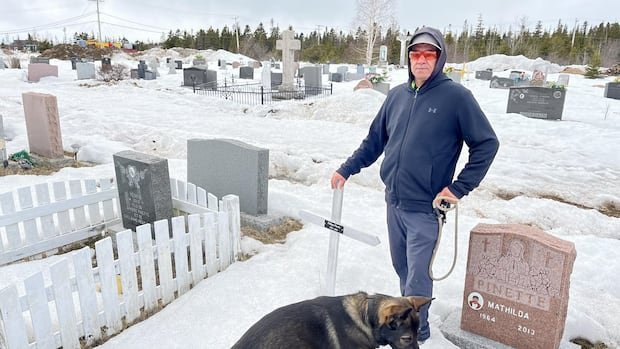

Shannon Fontaine recalls that his late brother Philippe Pinette, before being diagnosed with schizophrenia at 19, showcased talents in mathematics and drawing. Fontaine described Pinette as an artist who tragically passed away in custody due to what Quebec’s ombudsman deemed a severe breach of human rights.
The ombudsman’s investigation revealed numerous shortcomings in the treatment provided to Pinette, a 40-year-old Innu individual from Uashat, near Sept-Îles on Quebec’s North Shore. Pinette died in a hospital on September 19, 2022, while being cared for at the Quebec City detention center.
Fontaine emphasized in an interview with Radio-Canada at their Uashat residence, where they grew up, that his brother did not die in jail due to physical assault but succumbed to severe dehydration eight days after being admitted to Quebec City’s Hôtel-Dieu de Québec hospital.
Dr. Alain Bissonnette faces allegations of failing to provide essential care to Pinette between September 2 and September 11, 2022. The physician is set to appear in court next week but has not entered a plea or decided on a trial by judge or jury.
Charged under Section 215 of the Criminal Code for neglecting a vulnerable person in his care, Bissonnette could face a maximum penalty of five years imprisonment. Reports suggest Bissonnette ignored recommendations from prison staff to transfer Pinette to a hospital, leading to tragic consequences.
Fontaine demands transparency in the case, urging for the truth to be uncovered regarding the circumstances surrounding Pinette’s demise.
Pinette’s final days at the Quebec City detention center, as outlined in search warrants obtained by the Sûreté du Québec, portray a distressing picture of neglect and deteriorating health.
The investigation highlighted that Pinette, under public guardianship, was serving a sentence for violent acts against hospital staff and exhibited erratic behavior towards caregivers. Despite warnings from staff, Bissonnette allegedly delayed Pinette’s transfer to a hospital until it was too late.
Descriptions from witnesses and medical staff paint a grim picture of Pinette’s deteriorating condition, with alarming signs of neglect and lack of appropriate medical intervention. The autopsy report attributed his death to severe dehydration and its complications.
The Uashat mak Mani-utenam Band Council expressed concern over the case, emphasizing the importance of addressing systemic issues affecting Indigenous communities. Various advocacy groups have denounced the failures that led to Pinette’s tragic death, calling for accountability and systemic changes within public institutions.
While Bissonnette continues to practice medicine without restrictions, questions remain regarding potential disciplinary actions. Local health authorities have implemented corrective measures following the ombudsman’s recommendations but declined to provide detailed interviews on the matter.
The Quebec Public Security Ministry refrained from commenting, citing the ongoing legal proceedings. The case has sparked calls for recognizing and addressing systemic racism impacting Indigenous communities in Quebec, underscoring the need for significant reforms in healthcare and justice systems.