

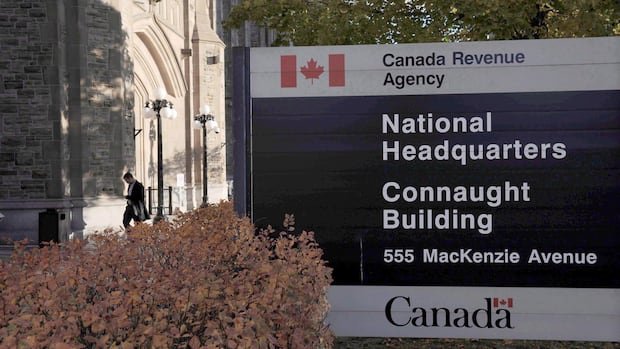

When the Canadian government presented its 2025 budget last month, it included a measure that experts in tackling tax fraud consider overdue. The proposal aims to address a particular type of fraud, known as a carousel scheme, which has led to the Canada Revenue Agency (CRA) inadvertently paying out substantial amounts in fake tax refunds to scammers.
The suggested legislation seeks to prevent carousel schemes from thriving in Canada, following an investigation by the fifth estate revealing significant financial losses to international criminal networks in recent years. Mike Cheetham, a carousel scheme expert, commended the CRA for acknowledging the issue but criticized the delayed response, emphasizing the agency’s responsibility to safeguard taxpayers’ funds.
The government’s legislative proposal aligns Canadian regulations on certain taxable goods with anti-fraud norms in Europe. The initiative, termed a reverse charge mechanism, aims to thwart fraudsters from claiming false GST and HST refunds by altering how GST payments are processed, thereby preventing illegitimate refund claims.
Carousel schemes involve a network of fictitious companies collaborating to create a facade of legitimate transactions, ultimately leading to the final company in the chain claiming a refund without having paid any taxes initially. The reverse charge mechanism disrupts this scheme by modifying the refund collection process, rendering it ineffective for scammers.
An undisclosed source within the CRA revealed concerns about the agency losing significant sums to carousel schemes, with estimates suggesting losses in the hundreds of millions. Despite lacking a comprehensive method to quantify the extent of financial losses, the CRA acknowledged identifying over $1.1 billion associated with carousel schemes from 2017 to 2023.
In response to mounting concerns, the CRA established a specialized task force to combat carousel schemes in October 2023. Collaborative efforts between the agency and the Department of Finance ensued to address the issue, resulting in the introduction of a reverse charge mechanism in the carbon emission trading sector to combat carousel fraud.
While the government has introduced measures to combat carousel fraud, critics argue that further industries vulnerable to such schemes should also be targeted. The recent budget proposal specifically outlines implementing a reverse charge mechanism in the telecommunications sector to curb carousel fraud activities.
Despite prior collaborative efforts between the CRA and UK authorities in dismantling carousel scheme networks, ongoing challenges persist in addressing the issue effectively. The proposed legislative changes aim to prevent fraudulent activities and enhance federal revenue by an estimated $90 million over four years starting in 2026-27.
In light of the identified fraudulent schemes in the telecommunications sector alone amounting to $600 million, stakeholders emphasize the need for broader implementation of the reverse charge mechanism across industries to effectively combat carousel fraud. The push to intensify criminal investigations and transition cases from civil to criminal proceedings underscores the urgency in addressing these financial crimes to protect public funds effectively.