

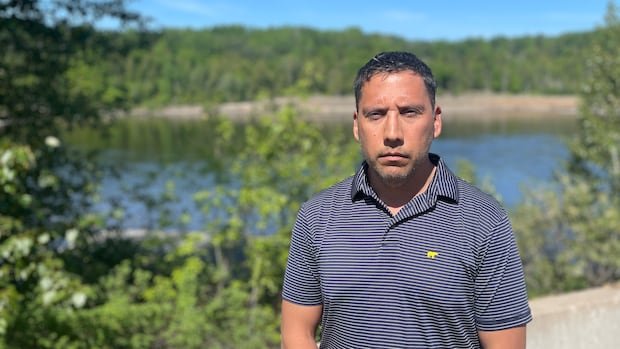

Leonard Nicholas perceives Atlantic salmon in a unique light compared to many residents of New Brunswick — he views them as akin to family or ancestors.
“They have inhabited this land for as long as we have,” remarked Nicholas, who serves as the fishery strategy director for Tobique First Nation. “That is why we are exerting extensive efforts to preserve their existence.”
The Tobique River, where Nicholas resides, flows into the Wolastoq, also known as the St. John River. In the 1980s, the river system harbored tens of thousands of salmon. Presently, only a few hundred salmon return to the Mactaquac Dam on the river annually, according to official counts from the federal Department of Fisheries and Oceans.
Although the salmon population is in dire straits, the Mactaquac Biodiversity Facility managed by DFO has been instrumental in sustaining their survival.
“One could liken the situation to a patient barely clinging to life, albeit in a feeble state,” explained UNB biologist Tommi Linnansaari.
“We are essentially keeping this patient, metaphorically speaking, on life support. If we were to disconnect it, the outcome would be immediate demise,”
The facility has been relocating salmon upstream past three hydroelectric dams and nurturing juvenile salmon from the river before releasing them upstream for reproduction.
DFO plans to shut down this facility in the autumn.
Christine Lyons, a spokesperson for DFO, acknowledged that despite 25 years of dedicated efforts, salmon returns remain alarmingly low.
Indigenous communities and scientists express concerns that the closure will spell the end for salmon in the Wolastoq, also known as outer Bay of Fundy salmon according to DFO and scientific classification.
Nicholas was informed about the closure in January, and in February, he was informed that DFO would not assist in transporting or nurturing the spring run of juvenile salmon.
“To suddenly drop this news on us in the same year they are shutting down operations without prior notice or consultation was a severe blow, and I have been scrambling since then,” he lamented.
Nicholas collaborates with a team that gathers juvenile salmon above N.B. Power’s Tobique River dam.

These salmon use a fishway, a ramp at the dam’s peak that guides them into a collection pool. Previously, DFO would collect these fish, raise them in their facility, and then release them above the dam for breeding.
Now, Nicholas has juvenile salmon, also known as smolts, passing through the fishway without anyone to nurture them. While he devises a plan, the Canadian Rivers Institute at UNB, a collaborative group of researchers dedicated to enhancing river conditions, has stepped in to assist.
The non-profit institute has been relocating the smolts downstream of the Mactaquac Dam.
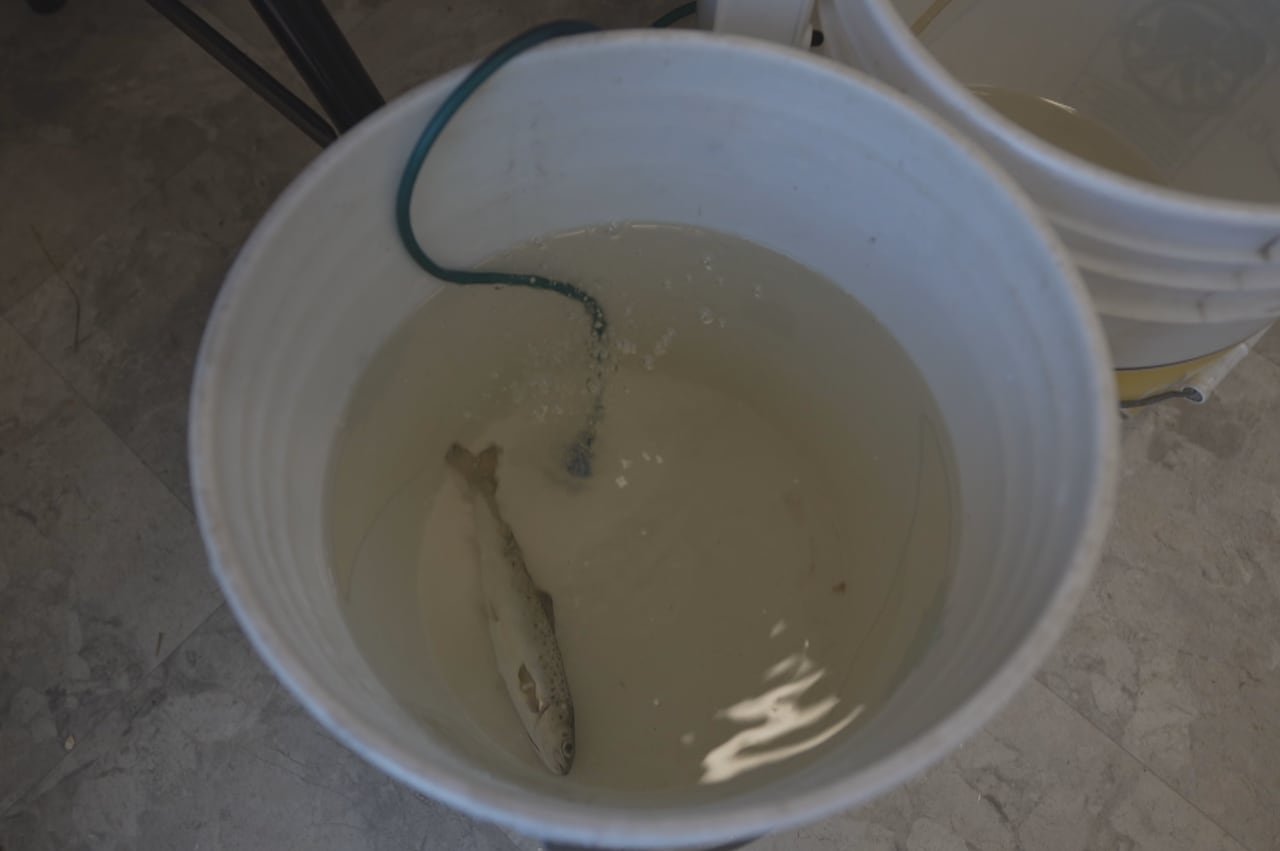
Approximately 2,600 smolts were collected at Tobique last year, with around 350 gathered during the autumn run this year.
Linnansaari, also affiliated with the Canadian Rivers Institute, points to research conducted by his UNB students indicating that these five-inch-long smolts have less than a one percent chance of journeying to the ocean and returning to reproduce.
Delayed Endangered Status