


On a breezy fall day, in the picturesque hills near Rome, an unexpected gathering took place. Wool producers, activists, designers, and even renowned figures like model and farmer Isabella Rossellini, along with her daughter, gathered at the farm of Ilaria Venturini Fendi. The focus was not on celebrating high-end fashion but on completely reimagining it.
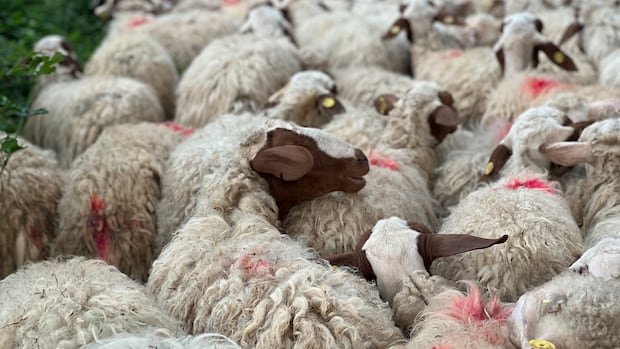
Fendi, who tends to 600 sheep at her working guest farm on the outskirts of Rome, highlighted the challenges of wool production in Italy. She emphasized the need to shift perspectives and reshape economies due to the current status of wool being considered a waste product in the region.
The inaugural World Hope Forum, hosted by Fendi, aimed to showcase that local, ethical, and circular wool production is achievable. The event brought together a network of individuals dedicated to demonstrating that wool processing can be sustainable and beneficial.
Fendi, well-versed in luxury as a scion of the renowned Italian fashion family, departed from the company to establish Carmina Campus. This label, known as “the singing fields,” centers on reuse and regeneration principles.
The gathering occurred ahead of the upcoming UN International Year of Rangelands and Pastoralists in 2026, emphasizing the importance of preserving traditional herding cultures and natural fibers. Additionally, it preceded the EU Focus Group meeting focusing on innovative and sustainable methods to empower European farmers in revitalizing the wool value chain.
Among the attendees was Blátnaid Gallagher, the founder of Ireland’s Galway Wool Co-op. The cooperative is dedicated to reviving native Irish wool, which had been nearly replaced by cheaper Asian imports falsely labeled as Irish. Gallagher is advocating for clearer regulations on fiber origins across Europe to support farmers and enhance consumer transparency.
Cynthia Hathaway, a Canadian designer based in the Netherlands, echoed Gallagher’s optimism. Hathaway’s efforts, like the Wool March, aim to draw attention to Europe’s shepherding cultures through unique forms of activism.
Gallagher and Hathaway believe that the global textile industry is on the brink of a shift back to natural fibers. However, they stress the necessity of enhanced protections for both producers and animals in the industry.
Currently, less than one percent of global textile fibers originate from wool, leading to the closure of local processing facilities in Europe and North America. The mass production of wool in countries like China and Australia has substantially driven down global prices, making it challenging for small producers in other regions to compete.
To combat these challenges, individuals like Reina Ovinge from the Knit Wit Stable in the Netherlands have developed micro-supply chains. Ovinge’s approach involves managing the entire wool production process, from shearing to spinning, in a localized manner to ensure quality control and sustainability.
At Mama Farm in Brookhaven, N.Y., Isabella Rossellini and her daughter, Elettra Wiedemann, oversee a diverse initiative that includes heritage sheep and biodiversity conservation. The Farm to Fashion program engages young designers in creating unique sweaters using the farm’s heritage wool, fostering a community-oriented approach.
Despite the successes of initiatives like Farm to Fashion, the high processing costs and lack of public-private partnerships remain significant barriers to scaling up sustainable wool production ventures. Philippe Fimmano, the organizer of the World Hope Forum, emphasizes the importance of patient, long-term investments in such initiatives.
While challenges persist, some wool producers are adopting sustainable scaling practices, particularly in recycled wool production. Matteo Mantellassi, CEO of Manteco in central Italy, champions the use of recycled wool, which significantly reduces CO2 emissions compared to virgin wool. Mantellassi’s company is actively engaged in promoting sustainable textile policies and educating young designers on utilizing eco-friendly fabrics.
In conclusion, the wool industry is witnessing a transformative period, with a growing emphasis on sustainability, ethical practices, and circular economy principles. Through collaborative efforts and innovative approaches, stakeholders are working towards a more sustainable and responsible wool production landscape.