


An airstrike conducted by a Ukrainian drone caused fires at a Black Sea port in Russia, according to officials on Sunday. The incident occurred at the port of Taman in the Krasnodar region and resulted in damage to an oil storage tank, warehouse, and terminals, leaving two individuals injured, as reported by regional Governor Veniamin Kondratyev.
Simultaneously, debris from Russian drones fell in Ukraine’s Odesa region, causing harm to civilian and transport infrastructure, leading to disruptions in power and water supply, Ukrainian officials confirmed.
Ukraine’s strategic drone strikes targeting Russian energy facilities aim to cut off Moscow’s oil export revenue necessary for its ongoing invasion efforts. In retaliation, Russia’s objective is to disrupt the Ukrainian power grid, with the intent of depriving civilians of essential utilities like heating, lighting, and water, in what Kyiv officials describe as an attempt to “weaponize winter.”
These attacks occurred just before scheduled U.S.-mediated discussions between Russian and Ukrainian envoys set to take place in Geneva on Tuesday and Wednesday, preceding the fourth anniversary of Russia’s full-scale invasion of Ukraine on Feb. 22.
Uncertainty Surrounding Security Guarantees for Ukraine
During his address at the Munich Security Conference in Germany on Saturday, Ukrainian President Volodymyr Zelenskyy highlighted lingering uncertainties regarding future security assurances for his nation. Zelenskyy also raised questions about the practicality of establishing a free trade zone, as proposed by the U.S., in the Donbas region, an area Russia insists Kyiv must relinquish for peace.
He expressed that the U.S. is aiming for a swift peace resolution, intending to finalize all agreements concerning Ukraine simultaneously, while Ukraine prioritizes signing agreements ensuring the country’s future security before anything else.
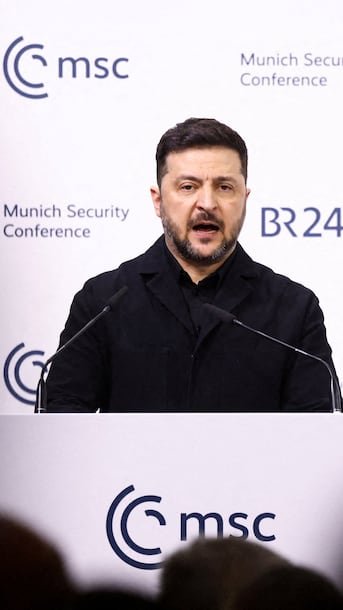
Ukrainian President Volodymyr Zelenskyy said Ukraine was being asked ‘too often’ to make concessions ahead of U.S.-brokered peace talks in Geneva next week with Russia.
Senator Jeanne Shaheen, a prominent member of the U.S. Senate foreign relations committee, echoed Zelenskyy’s concerns. She emphasized the importance of securing tangible security guarantees within any eventual peace agreement to prevent repeated conflicts, given Russia’s expansionist ambitions beyond Ukraine.
European Union foreign policy chief Kaja Kallas pointed out that Russia’s diplomatic strategy hinges on securing concessions at the negotiation table, with expectations for the U.S. to facilitate these concessions. However, Kallas emphasized that decisions on crucial Russian demands, such as sanctions removal and asset unfreezing, ultimately lie with Europe