

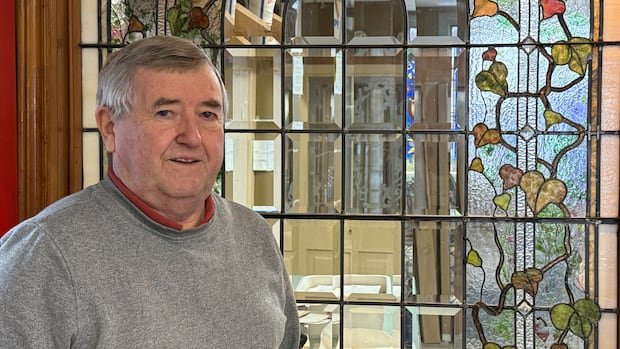

After decades of creating and restoring stained glass in Ontario, the artisans at Sunrise Stained Glass in London, Ont., have made the tough choice to close their doors.
For nearly 50 years, this establishment on Wharncliffe Road has been a hub for teaching the ancient art of stained glass to numerous students and breathing new life into intricate window panels.
The owner is now preparing to shut down the business by the end of the month, as indicated by the prominent ‘for sale’ sign outside.
What began as a simple hobby for Roger Chapman in 1979 when he founded the shop evolved into designing and crafting windows for private homes and undertaking significant restoration projects for numerous churches spanning from Windsor to Kingston to Sudbury.
Describing the process of reconstructing deteriorating windows as “rewarding,” Chapman expressed his deep passion for the craft.

Residents of London may be familiar with Chapman’s local contributions. Since the late 1980s, Sunrise has meticulously restored nearly all the windows at St. Peter’s Cathedral Basilica in London, including the intricate rose windows, as well as a significant portion of the windows at St. John the Evangelist Anglican Church.
The shop’s most extensive project to date was the restoration of the Basilica of Our Lady Immaculate in Guelph, Ont., featuring over 550 stained glass panels. This project garnered an award of excellence from the Canadian Association of Heritage Professionals.
In addition to these notable projects, Chapman and his partners have undertaken restoration works at various locations across Ontario, such as St. Mary’s Pro Cathedral in Hamilton, the Central Presbyterian Church in Cambridge, Queen’s University, and the Royal Military College in Kingston.
Aside from restoration projects, Sunrise has been a go-to destination for stained glass hobbyists, providing supplies and hosting beginner classes continuously since its inception, according to Chapman.
Explaining the decision to close shop, Chapman mentioned that he and his two partners felt they were no longer able to sustain the business due to age, with plans to cease operations by the end of December.
Transition from Wicker to Stained Glass
Chapman reminisced about creating his first stained glass item, an ashtray for his wife, which he humorously noted still lingers in his memory as his initial attempt in the craft.
His journey into stained glass began during his time managing a wicker store in the 1970s when a stained glass artist occupied the space above his shop. When the artist suddenly departed, leaving behind all his tools, Chapman saw an opportunity to delve into the art form.
“I thought, well, that looked easy from what I’ve watched,” he recounted. “So, I read a book and I used his tools and I started making things myself. And that was the start of it.”
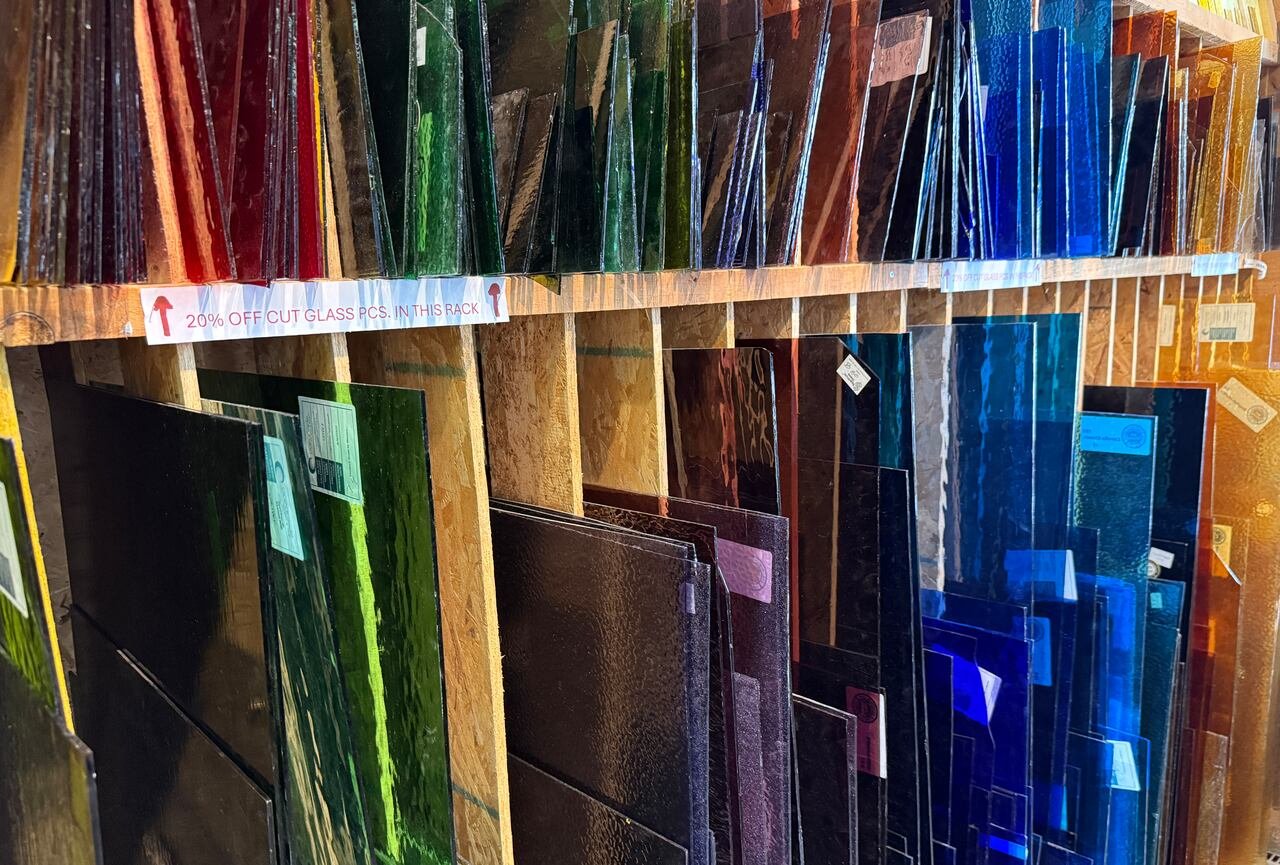
Stained glass soon eclipsed the retailing of wicker furniture in Chapman’s life, leading to the inclusion of two new partners, one with expertise in church window restoration and the other skilled in painting, broadening the shop’s scope to encompass the restoration endeavors they successfully pursued across the province.
The Popularity of Stained Glass in London
Chapman highlighted London’s historical connection to stained glass, attributing it to Hobbs Manufacturing, a key company in the early 20th century that functioned as a one-stop shop for home construction needs,