

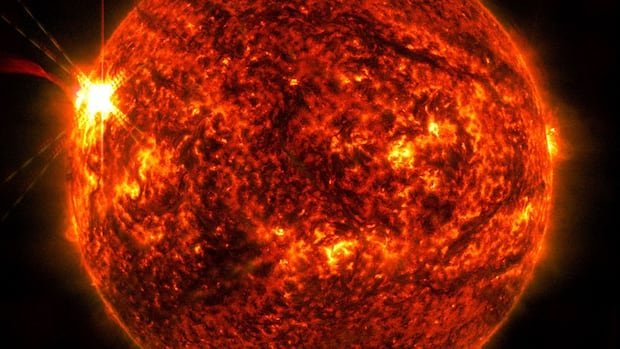

Last week, the sun released its most powerful solar flare of the year, emitting a burst of radiation and light that led to temporary radio blackouts on the sunlit side of Earth. While the flare was classified as an X-class, the most severe type of solar flare, it went mostly unnoticed by the general public not following space news.
Although the impact was limited this time, geomagnetic storms and more severe space weather events that can result from solar flares have the potential to disrupt power grids, aviation routes, global communication networks, GPS systems, and satellite operations. This historical occurrence is not unprecedented and could recur in the future.
Back in 1859, amateur astronomers Richard Carrington and Richard Hodgson observed a massive burst of light from the sun’s surface, triggering a subsequent geomagnetic storm that produced spectacular aurora displays and disrupted telegraph systems across Europe and North America. Telegraph operators faced overwhelming signal disruptions, with some wires overheating and causing fires, while others operated without batteries due to the solar activity.
Experts now attribute the 1859 event, known as the Carrington Event, to one or more coronal mass ejections (CME), massive solar material eruptions that often follow solar flares. While solar flares primarily emit radiation that affects our upper atmosphere, CMEs release charged particles and plasma that can travel at high speeds, causing geomagnetic storms upon interaction with Earth’s magnetic field. These storms have historically impacted telegraph systems and now pose risks to modern infrastructure such as power grids, satellites, and navigation systems.
In 1989, Canada experienced its most significant solar storm when a CME struck Earth’s magnetic field, leading to widespread power outages in Quebec. This event serves as a benchmark for assessing and enhancing system resilience against future solar disturbances.
While solar storms have caused disruptions in the past, the current period of heightened solar activity signals the need for vigilance in anticipating and mitigating potential impacts on sensitive technologies. With increased reliance on systems like GPS for navigation, monitoring space weather events becomes crucial to safeguarding critical infrastructure. Canada’s geographic location near the northern magnetic pole exposes it to greater vulnerability to space weather but also offers a strategic advantage for monitoring and forecasting future solar events.