

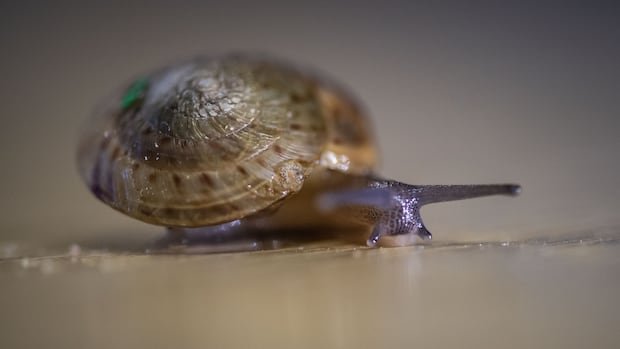

A full interview with invertebrate zookeeper Katie Kelton reveals the success story of the greater Bermuda land snails. A decade back, the only surviving population of these snails was found in Hamilton, thriving on concrete slabs near a dripping air conditioner. Today, through the efforts of conservationists, over 10,000 snails have been released into Bermuda’s protected wooded areas, leading to a noticeable resurgence in their population.
Katie Kelton, from Chester Zoo, expressed delight at the snails’ progress, citing confirmed breeding and increasing numbers as signs of success. The collaborative conservation project involving Chester Zoo, Biolinx Environmental Research, and the Bermuda government will soon publish a study in Oryx, The International Journal of Conservation showcasing the program’s achievements.
Despite the positive developments, the snails still confront threats from habitat loss and invasive predators. Nevertheless, their critical role in Bermuda’s ecosystem, as decomposers aiding in nutrient recycling, highlights the importance of their conservation. Kelton described the snails as visually appealing and emphasized their significance in the ecosystem.
The International Union for Conservation of Nature classifies the greater Bermuda land snails as critically endangered due to human activities and invasive species introduction. Celebrated during Reverse The Red Day by the IUCN, the successful reintroduction of the snails signifies a substantial milestone in biodiversity preservation efforts.
Kelton shared the challenges faced during the captive-breeding process, underscoring the team’s dedication to snail conservation. While the snails have been reintroduced to various sites across Bermuda, their long-term survival remains uncertain, requiring ongoing protection from predators and human interference.
The rewilding of the snails on offshore islands has proven successful, with the creatures thriving and integrating back into their natural habitats. However, sustained efforts are necessary to safeguard the colonies and prevent future threats. Kelton expressed gratitude for her role in saving the beloved snails, emphasizing the importance of preserving species diversity.