

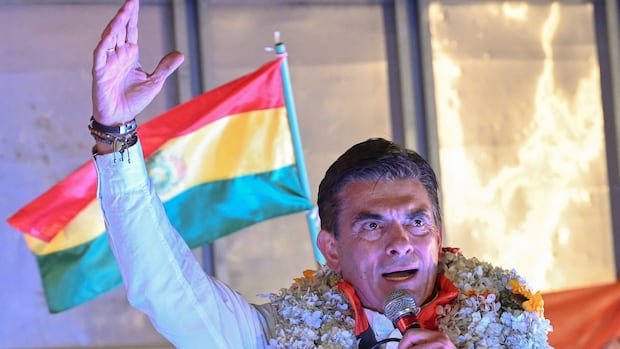

Rodrigo Paz, a centrist senator previously not widely recognized nationally, emerged victorious in Bolivia’s recent presidential election, according to preliminary results released on Sunday. Paz secured 54% of the votes, surpassing Jorge (Tito) Quiroga’s 45%, who had a brief stint as president in the early 2000s.
Addressing his supporters on Sunday evening alongside his wife, María Helena Urquidi, and four adult children, Paz expressed confidence in his upcoming governance. He highlighted the promise of positive change and progress for Bolivia under his leadership.
This election marked a shift as it featured a contest between two conservative and business-friendly candidates, a departure from the dominance of Bolivia’s Movement Toward Socialism party led by Evo Morales since 2005. President Luis Arce opted not to pursue another term for MAS due to its poor performance in the previous elections.
Rodrigo Paz and his popular running mate, Edman Lara, gained significant support from disillusioned working-class and rural voters, resonating with their dissatisfaction with MAS’s excessive spending. Following the election results, Paz’s supporters celebrated exuberantly in La Paz, expressing their joy through fireworks and car honking.
Despite his extensive political background as a lawmaker and mayor, Rodrigo Paz, son of former President Jaime Paz Zamora, entered the race as a relative unknown. However, his choice of Edman Lara, a former policeman who gained fame for his anti-corruption advocacy, injected fresh energy into his campaign.
Paz’s victory spanned six of Bolivia’s nine regions, securing crucial areas with a significant Indigenous and working-class population, once the stronghold of Morales. His administration faces significant challenges, including economic instability characterized by a shortage of U.S. dollars, high inflation rates, and fuel shortages.
With plans to reform Bolivia’s economic model by ending fixed exchange rates and reducing subsidies, Paz aims to strike a balance between market reforms and maintaining social benefits. His victory has been hailed as transformative by the U.S., emphasizing the potential for enhanced bilateral relations.