

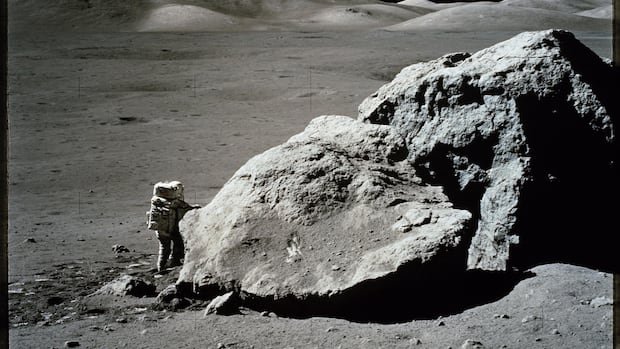

On the historic date of July 20, 1969, the world witnessed a monumental event as two American astronauts, Neil Armstrong and Buzz Aldrin, smoothly maneuvered across the moon’s surface, while Michael Collins observed from the command module above. This moment was intended to mark the beginning of a new era, the age of space exploration, with humans breaking free from the confines of Earth and venturing into the vast expanse of space.
Although there were six additional missions, including the infamous Apollo 13, which encountered a mishap preventing a lunar landing, humanity’s lunar aspirations came to a halt after Apollo 17 in December 1972. Various reasons have been attributed to the end of the moon missions, such as the costly Vietnam War, accomplishing the goal of surpassing the Soviet Union to the moon, or diminishing public interest. Since then, it has been 53 years since humans have ventured close to the moon.
However, a new chapter is unfolding with NASA’s ambitious Artemis program, aiming to return humans to the lunar surface in the coming years. But what drives this renewed interest in lunar exploration and how does it benefit mankind?
Philip Stooke, a professor emeritus at Western University, emphasized that lunar missions serve both scientific and engineering purposes, pushing the boundaries of human capability and fostering innovation. The upcoming Artemis II mission, scheduled for early February, will not involve a moon landing but will orbit the moon, allowing astronauts to travel further than ever before. The mission will test vital equipment and conduct experiments to pave the way for Artemis III, set for 2028, where astronauts will return to the lunar surface, particularly to the uncharted south pole.
Beyond NASA’s Artemis program involving 61 countries, other nations like China and India have ambitious lunar plans, aiming to land humans on the moon by 2030 and 2040, respectively. The moon has become a coveted destination for not just visits but potentially establishing a long-term presence, with over a dozen private companies investing in lunar exploration.
While some may view lunar missions as extravagant and advocate for redirecting funds to pressing issues like climate change or poverty, space agencies and private entities see it as a strategic investment. The involvement of private companies underscores the profit potential in exploiting lunar resources, driving innovation and technological advancements.
Moreover, lunar exploration yields scientific discoveries that have practical applications on Earth, particularly in medical advancements and technology development. The legacy of the Apollo missions extends to everyday technology, from computers to food safety measures, demonstrating the tangible benefits of space exploration.
As governments collaborate with companies in the new space economy, ventures like lunar mining for resources such as water and helium-3 are gaining traction, promising economic opportunities and job creation. The space industry, once criticized for its costs, now fuels a thriving business ecosystem that benefits various sectors and job markets.
The future of lunar exploration remains uncertain, but the potential for transformative impact on humanity and technological innovation is profound. The convergence of space exploration, artificial intelligence, and lunar activities holds the promise of reshaping human existence in unprecedented ways, ushering in a new era of possibilities.