

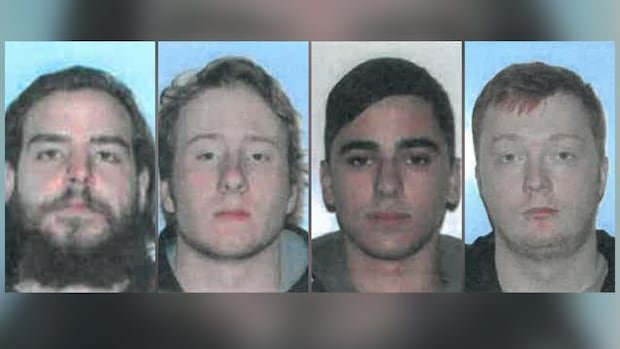

Three individuals in Quebec accused of aiding terrorism will face trial following the submission of a direct indictment by the federal Crown prosecutor’s office on November 7, accompanied by fresh charges. This legal maneuver circumvents a preliminary inquiry that had been requested by the defendants’ legal representatives in September. Authorized by the attorney general of Canada or deputy attorney general, the indictment signifies that the case will now move to Superior Court, potentially leading to a trial in 2026.
In July, the Royal Canadian Mounted Police (RCMP) charged four men, including two active members of the Canadian Armed Forces (CAF), for their alleged involvement in a purported anti-government scheme to unlawfully seize land in the Quebec City area. Described by law enforcement as an instance of “ideologically motivated violent extremism,” the plot involved weapons charges and serious accusations of facilitating a terrorist activity against three of the accused individuals: Marc-Aurèle Chabot, 24; Simon Angers-Audet, 24; and Raphaël Lagacé, 25. Bail for these individuals was denied in August.
Chabot, identified as the de facto leader in court documents, now faces additional charges for instructing individuals to participate in activities for a terrorist group, a crime punishable by life imprisonment. The federal prosecutor’s office alleges that between June 2021 and January 2024, Chabot knowingly directed Angers-Audet, Lagacé, and others associated with an alleged anti-government faction of current and former military personnel known as Hide & Stalk to engage in actions for the benefit of a terrorist group. Furthermore, the three men are newly charged with using or possessing property for terrorist purposes.
Regarding the legal process, three of the accused men opted for a jury trial in September. Their legal teams had requested a preliminary inquiry scheduled for January to determine the sufficiency of evidence for trial. However, the direct indictment route was pursued, a strategy often employed by the Crown in cases involving terrorism or significant organized crime, according to criminal law professor Noah Weisbord from McGill University. This approach allows for the addition of charges, expedites the trial process, and aids in managing disclosure challenges, such as safeguarding sensitive evidence and witnesses.
A fourth individual, Matthew Forbes, 33, of Pont-Rouge, Que., faces various charges, including possession of firearms, prohibited devices and explosives, related to the Explosives Act and Defence Production Act governing access to military resources. Forbes was granted bail under stringent conditions. Chabot and Forbes were active military members stationed at Canadian Forces Base Valcartier near Quebec City at the time of their arrest on July 8.