

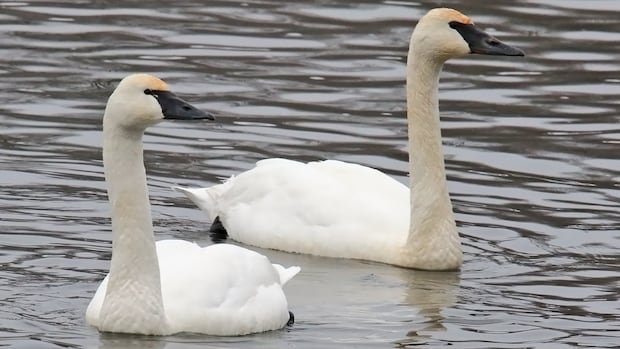

The federal government is reviewing a proposal to introduce a new hunting season for tundra swans in the Prairie provinces, a move that could pose a risk to trumpeter swans, a similar-looking and vulnerable species, according to a hunter. The suggested modifications to Canada’s migratory bird regulations would establish a tundra swan hunting season in Alberta, Manitoba, and Saskatchewan. While tundra swans are hunted in certain U.S. states, they are currently protected at the federal level in Canada.
David Duncan, a hunter and former biologist, expressed concerns that a tundra swan hunt could result in accidental shootings of trumpeter swans, as the two species share habitats and closely resemble each other. Duncan emphasized that most hunters may struggle to differentiate between the two species, especially when the swans are in flight.
Trumpeter swans in Alberta were previously classified as a threatened species under the province’s Wildlife Act but are now considered a species of special concern due to significant population growth in North America in recent decades. Duncan highlighted the possibility of inadvertently shooting trumpeter swans while targeting tundra swans.
Tundra and trumpeter swans are the only native swan species in Canada, with the mute swan being an Old World native and regarded as an invasive species. Trumpeter swans, with wingspans of up to 10 feet, are one of the largest waterfowl species globally and are the heaviest native bird in North America, weighing up to 30 pounds.
To address concerns about the potential impact on trumpeter swans, wildlife biologist Frédérique Tremblay from the Canadian Wildlife Service mentioned that the federal government is examining strategies to safeguard the species. In the U.S., where both tundra and trumpeter swans coexist, accidental killings of the wrong species are minimal. Some states educate hunters on distinguishing between the two swan species and mandate reporting of tundra swan kills to confirm species identity.
The proposed hunting plan includes issuing 500 tundra swan permits in Alberta, 600 in Saskatchewan, and 400 in Manitoba. The federal government anticipates that a tundra swan hunting season would offer new opportunities for hunters, benefit hunting outfitters and businesses, and is a response to stakeholder interest.
The proposed hunting season is currently in the consultation phase, allowing for public feedback before any formal decisions are made. Public input on the suggested migratory bird regulatory amendments, including the proposed hunting seasons, can be submitted via email until Feb. 15. Additionally, the government’s proposed changes include initiating a mourning dove hunting season in the Prairie provinces and expanding the sandhill crane hunt in Alberta.
Alberta’s Ministry of Forestry and Parks spokesperson, Michael Plenits, expressed support for science-based wildlife management and regulated hunting opportunities. Any future adjustments would consider population data, conservation factors, stakeholder input, and jurisdictional alignment, with decisions made in collaboration with federal and provincial partners. The earliest possible implementation of new hunting seasons would be in 2028.