

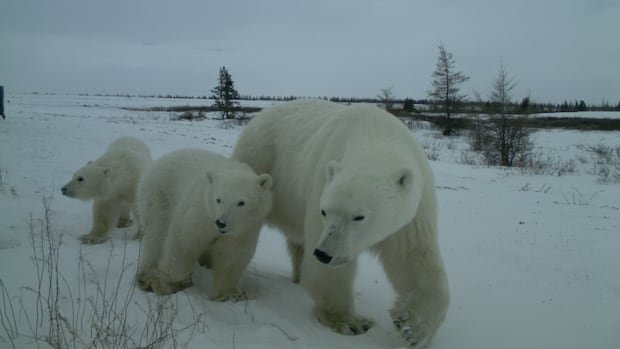

In northern Canada, residents have observed a rise in polar bears venturing closer to human communities in recent years. Initially believed to be driven by hunger and the melting sea ice, researchers from the University of Saskatchewan and University of Manitoba conducted an 11-year study revealing a different perspective.
Contrary to popular belief, the study found that it wasn’t just undernourished bears approaching communities. The longer the bears spent off the ice, irrespective of their body condition, age, or gender, the more frequent their encounters with humans became. This behavior was attributed to the bears spending more time on shore.
Douglas Clark, a professor at the U of S, began monitoring polar bears fifteen years ago in Wapusk National Park near Churchill, Man., using trail cameras. The research aimed to understand why polar bears were increasingly interacting with humans. The study, recently published in Arctic Science, demonstrated that the bears’ presence near humans was a result of climate change reducing sea ice, leading them to spend extended periods on shore.
Although some bears were hungry, they did not show signs of preying on humans. The study clarified that while nutritional stress was a factor, it did not drive bears to seek out communities for food as previously thought. The researchers emphasized that understanding these behaviors was crucial as polar bears adapt to changes in their habitat due to climate change.
The research will continue to monitor polar bear behavior to assess any long-term impacts on their interactions with humans and their environment.