

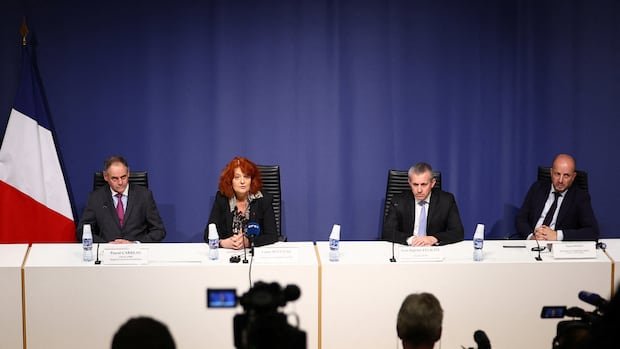

Two individuals linked to the Louvre jewel theft have partially confessed to their involvement, according to a Paris prosecutor. Laure Beccuau announced during a press briefing that the suspects are facing initial charges related to theft by an organized gang and criminal conspiracy.
The robbery, which occurred on October 19 and lasted less than eight minutes, resulted in the disappearance of jewels valued at approximately $143 million CAD, shocking the global community. One of the suspects, a 34-year-old Algerian residing in France since 2010, was apprehended at Charles de Gaulle airport as he was preparing to depart for Algeria without a return ticket. He lived in Aubervilliers, a northern suburb of Paris, and was primarily known to authorities for traffic violations.
The second suspect, aged 39, was arrested at his residence in Aubervilliers. Beccuau stated that there is no indication that he was planning to leave the country. This individual had a history of thefts, and his DNA was discovered on one of the glass cases from which the jewels were stolen and on items left behind by the thieves.
Authorities had until Wednesday evening to formally charge, release, or request an extension for the suspects. The stolen jewels remain unrecovered, with Beccuau cautioning that anyone attempting to sell them would be complicit in concealing stolen property.
French police acknowledged significant deficiencies in the Louvre’s security apparatus earlier on Wednesday, revealing vulnerabilities that allowed the swift daylight robbery to occur. Paris Police Chief Patrice Faure highlighted outdated systems and delays in upgrades as contributing factors to the breach. He mentioned that ongoing renovations, slated for completion by 2029–2030, would address these shortcomings.
Faure also disclosed that the Louvre’s security camera operating authorization had lapsed in July, underscoring administrative oversights in the museum’s safeguards. The initial alert to authorities came from a passerby who observed suspicious individuals outside the Louvre.
Additionally, the theft revealed a gap in insurance coverage as the stolen jewels were not privately insured. The French government self-insures national museums due to exorbitant premiums for insuring invaluable heritage. Faure opposed immediate security solutions, emphasizing the need to enhance the alert system rather than stationing permanent guards within the museum.
The heist’s simplicity and speed underscored critical security lapses within the museum, prompting calls for stricter surveillance measures and enhanced protection of cultural treasures. The incident has placed pressure on museum and cultural officials to address systemic vulnerabilities and prevent future breaches of this nature.