

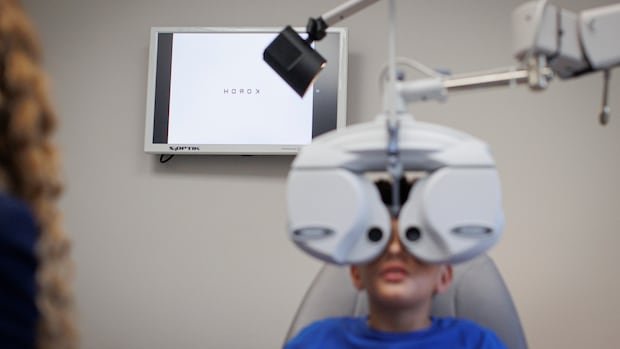

Ophthalmologists are cautioning provincial authorities against proceeding with initiatives that would permit optometrists to conduct certain surgeries and laser eye treatments that are currently beyond their established scope of practice.
Dr. Nina Ahuja, the incoming president of the Canadian Ophthalmological Society, emphasizes the importance of keeping surgical procedures within the purview of physicians, asserting that delegating even seemingly minor tasks to optometrists poses significant risks to patient safety.
This response comes in light of reports indicating that the governments of Ontario and Alberta are collaborating with optometrists to introduce proposed changes to their practice, aimed at enhancing access to eye care services.
While both professions focus on eye health, optometrists serve as primary eye care providers, having completed a four-year professional program following undergraduate studies. In contrast, ophthalmologists are specialized surgeons and eye disease experts, requiring a minimum of nine years of medical training beyond their undergraduate education.
Drawing from over two decades of experience as an ophthalmologist, Ahuja underscores that surgical expertise encompasses not only technical skills but also a comprehensive understanding of overall bodily functions and the significance of a patient’s medical background.
In an analogy, she likens the role of an optometrist to an air traffic controller and that of an ophthalmologist to a pilot, highlighting the distinct skill sets involved in each profession.
A representative for Ontario’s health minister indicates that the proposed changes may enable optometrists to conduct minor in-office surgical procedures under local anesthesia, administer laser therapy for managing conditions like cataracts and glaucoma, order diagnostic tests, and independently treat open-angle glaucoma.
An examination of ophthalmological surgeries in Ontario from 2010 to 2020 revealed a 74% increase in patient waitlists, with the longest queues observed for cataract, vitreoretinal, and strabismus surgeries. Although the proposed changes do not encompass these procedures, the intention is to alleviate pressure on healthcare providers and facilities offering such services.
In 2020, the Alberta College of Optometrists proposed expanding their scope of practice to include minor laser treatments, injections, and superficial skin surgical procedures such as skin tag and wart removal. The Ministry of Primary and Preventative Health Services in Alberta recently expressed support for this expansion and is collaborating with the optometrists’ college to finalize the proposed adjustments.
Optometrists seeking authorization to perform these procedures would need to pass examinations in laser and minor surgery and complete supervised clinical practice. The ministry acknowledges the college’s willingness to refine its proposals to address patient safety concerns, although specific details on these refinements are yet to be disclosed.
Dr. Allison Scott, president of the Canadian Association of Optometrists, clarifies that the proposed changes exclude procedures conducted in operating rooms, such as retinal surgeries. She cites data from the UK and US, where optometrists perform laser procedures, demonstrating their safety and efficacy.
Research examining over 146,000 optometrists performing laser procedures in the US, published last year, revealed only two adverse outcomes. Scott asserts that optometry students receive thorough training in the proposed procedures, potential complications, and their management, underscoring the need to optimize their expertise for safe practice.
The article concludes with a note acknowledging support from the Canadian Medical Association for Canadian Press health coverage, with CP retaining sole responsibility for the content.