

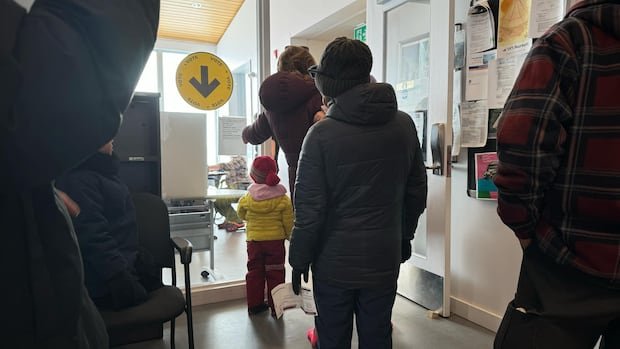

Elections Canada has revealed that the voting process in Nunavik during the recent federal election faced significant challenges due to inadequate planning and oversight, resulting in the early closure of some polling stations.
After the federal election on April 28, Elections Canada admitted that a scarcity of staff led to the premature closure of polling stations in Nunavik, preventing some voters from casting their ballots. In a report issued on Thursday, Elections Canada highlighted that the lack of meaningful engagement with local communities in the returning officer’s plan was a key issue.
The report stated that the approach taken did not align with Elections Canada’s standards but was still approved by headquarters. It pointed out that crucial pre-event activities, such as community outreach in the northern areas, were not carried out fully, diminishing local participation and affecting service delivery.
According to Elections Canada, the returning officer for the Abitibi-Baie-James-Nunavik-Eeyou riding reported that community leaders were not consulted on the voting services, leading to challenges in recruiting poll workers. The investigation identified significant deficiencies in election preparations and noted a lack of communication with managers regarding issues.
The report concluded that many voters in Nunavik were either deprived of the chance to vote or faced significant obstacles due to reduced or nonexistent voting services. Elections Canada disclosed that six communities did not receive advance voting services, while seven had limited access. On election day, two communities had no voting services, seven had partial services, and five had full services.
Recognizing the broader implications of the problems in Nunavik, Elections Canada pledged to address barriers for Indigenous voters. In Nunavik, where 90% of the population are Inuit and predominantly speak Inuktitut, the issues during the election underscore larger challenges.
During a visit to Kuujjuaq in northern Quebec in September, Chief Electoral Officer Stephane Perrault issued an apology to the Kativik Regional Government in Quebec for the voting difficulties community members encountered. Elections Canada officials visited four northern villages in Nunavik, where community leaders expressed frustration and confusion among their members.
The report provided various recommendations, such as enhancing community engagement, ensuring accountability, and establishing a formal escalation protocol for returning officers. It also proposed forming specialized teams knowledgeable about Indigenous and northern communities to support election planning and execution.
Elections Canada committed to implementing the recommendations before the upcoming spring elections.