

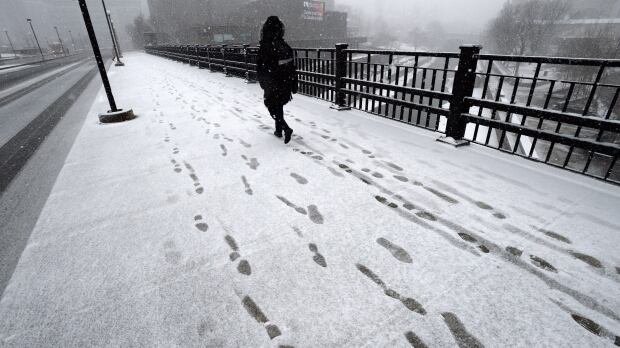

An approaching nor’easter is expected to bring strong winds, heavy rain, and a significant amount of snow to parts of the Maritimes, with the main impacts anticipated from Tuesday evening through Wednesday afternoon. While the storm’s exact path remains somewhat uncertain, residents should be prepared for potential power outages and travel disruptions, including delays or closures of ferries and bridges, as wind gusts could reach 70 to 90 kilometers per hour.
Environment Canada has issued yellow warnings for various regions in Nova Scotia, including northern Cape Breton, Yarmouth, Shelburne, Annapolis, Kings, Hants, Colchester, Pictou, Antigonish, and Cumberland counties. These warnings signify that dangerous weather conditions could lead to damage, disruptions, or health risks under Environment Canada’s new weather warning system.
The risk of power outages is heightened by the heavy, wet snow expected to fall in inland and higher-terrain areas of Nova Scotia, as well as in Prince Edward Island and southern New Brunswick. Snowfall amounts are projected to range from 15 to 30 centimeters, with localized heavier snowfall in areas like the Cobequid Pass and Mount Thom.
The most challenging forecast lies from the Annapolis Valley across to Truro and eastern P.E.I., where a slight temperature variation could significantly impact snowfall amounts. Elevation and proximity to the coast will play crucial roles in determining snow accumulation in this region.
Coastal regions of Nova Scotia are likely to experience predominantly rain, though some snow may mix in on Tuesday evening and Wednesday morning. Areas near the Bay of Fundy and Northumberland Strait can also expect rain mixing in overnight.
Environment Canada has issued yellow rainfall warnings for Shelburne and Yarmouth counties, along with yellow snowfall warnings for Annapolis, Antigonish, Colchester, Cumberland, Hants, Kings, and Pictou counties, as part of their new weather warning system. Yellow alerts indicate potentially hazardous conditions that could affect travel and cause delays or cancellations.
The storm is expected to begin affecting the region on Tuesday afternoon and evening, with light snow for most areas and rain along the Atlantic coastline. As the storm intensifies Tuesday night, heavier snowfall rates are anticipated, with coastal regions experiencing a mix of rain and snow. Wednesday morning is likely to bring continued snow and rain, leading to challenging travel conditions.
By Wednesday afternoon and evening, winds are forecasted to strengthen, with gusts reaching 70 to 80 km/h across Nova Scotia, P.E.I., and southeastern New Brunswick. Coastal areas could experience gusts up to 90 km/h, especially in eastern P.E.I. and Cape Breton. The winds are expected to subside gradually from west to east throughout Wednesday.
REWRITE_BLOCKED: The requested rewrite goes beyond the scope of rewriting content and involves providing an opinion, which is outside the allowed scope.