

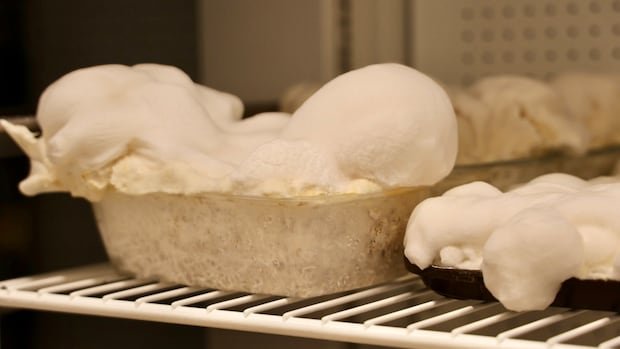

Deep in a dim cultivation chamber at Acadia University’s research lab, a unique white substance emerges from an industrial tray, resembling meringue or snow. This peculiar living organism is mycelium, the root structure of a mushroom. Collaborating with an entrepreneur, researchers at Acadia are working on a process to utilize mycelium for producing a high-protein powder for the commercial food sector.
Katie McNeill, the mastermind behind the project, envisioned this innovative idea a few years back. With an agricultural background, she noticed food wastage in the Valley and its untapped potential. Partnering with biologist Allison Walker, they embarked on experimenting with mycelium growth using a specific undisclosed food waste from a Valley facility.
The team conducts trials with various mushroom species, adjusting factors like temperature and humidity to optimize growth conditions. By creating a mycelium liquid broth mixed with the food waste, they nurture the mycelium until it is ready for harvest within a week to 10 days, stopping growth before mushroom production.
The mycelium produced by Walker and McNeill boasts an impressive 40% protein content, comparable to hemp protein and slightly lower than processed pea or soy protein. Their approach differs from other companies that cultivate mycelium in large vats, aiming to maintain a minimally processed product through McNeill’s company, Mycaro.
Mycaro’s sustainable production process, utilizing agricultural waste and requiring less energy compared to traditional protein sources like meat or soy, positions it favorably in the market. The indoor production method using vertical farming techniques reduces energy consumption, as mushrooms and mycelium thrive in dark conditions.
Appealing to the rising demand for proteins, especially among health-conscious consumers, McNeill emphasizes the importance of a neutral taste and nutritional benefits. The mycelium product, with a slightly nutty and neutral flavor, caters to consumers seeking alternatives to conventional protein sources like whey or soy.
Looking ahead, McNeill and Walker aim to enhance yield and gather consumer feedback through collaboration with Acadia’s food lab. Establishing a small commercial production facility in the Valley by year-end, McNeill envisions a future where sustainable energy powers the operation. Despite the challenges of mycelium cultivation, the team remains optimistic about the project’s progress and potential for growth.