
The London Police Service (LPS) is intensifying efforts to track the source of illegal firearms following a spike in reported shootings in London, Ont., which has reached 20 in 2025. The Guns and Gangs Section of the LPS has identified the origins of 31 guns this year through the Firearms Analysis and Tracing Enforcement (FATE) process.
Officials from the police force provided CBC London with insights into the FATE process and how investigators obtain information ranging from the gun owner’s identity to the gun’s source.
Utilizing DNA, Prints, and Other Human Clues
When a firearm is received at the Forensics Identification Section lab, Det. Const. Craig Walsh, a forensic specialist, immediately begins the process of searching for clues. DNA analysis plays a crucial role in this forensic work. Walsh emphasized the significance of DNA collection, stating that it is the first step in the process. A cotton swab is used to collect DNA samples from the firearm, targeting textured or grooved areas to detect skin cells, bodily fluids, or other DNA sources.

After the DNA samples are sent to the Centre for Forensic Science in Toronto, it is not uncommon to detect DNA from multiple individuals, providing valuable leads for potential arrests and gun confiscations.
Following DNA collection, Walsh moves on to fingerprint analysis. He explained that examining fingerprints left on a firearm can often reveal crucial information, pointing out the significance of fingerprints as potential evidence.
Walsh demonstrated the process of dusting smooth surfaces of the firearm with a fine powder to reveal fingerprints that are normally invisible to the naked eye.
We have a high success rate in determining where guns were originally manufactured and the last point that these guns were sold.– Det. Sgt. Jon Meinen, London police Guns and Gangs Section
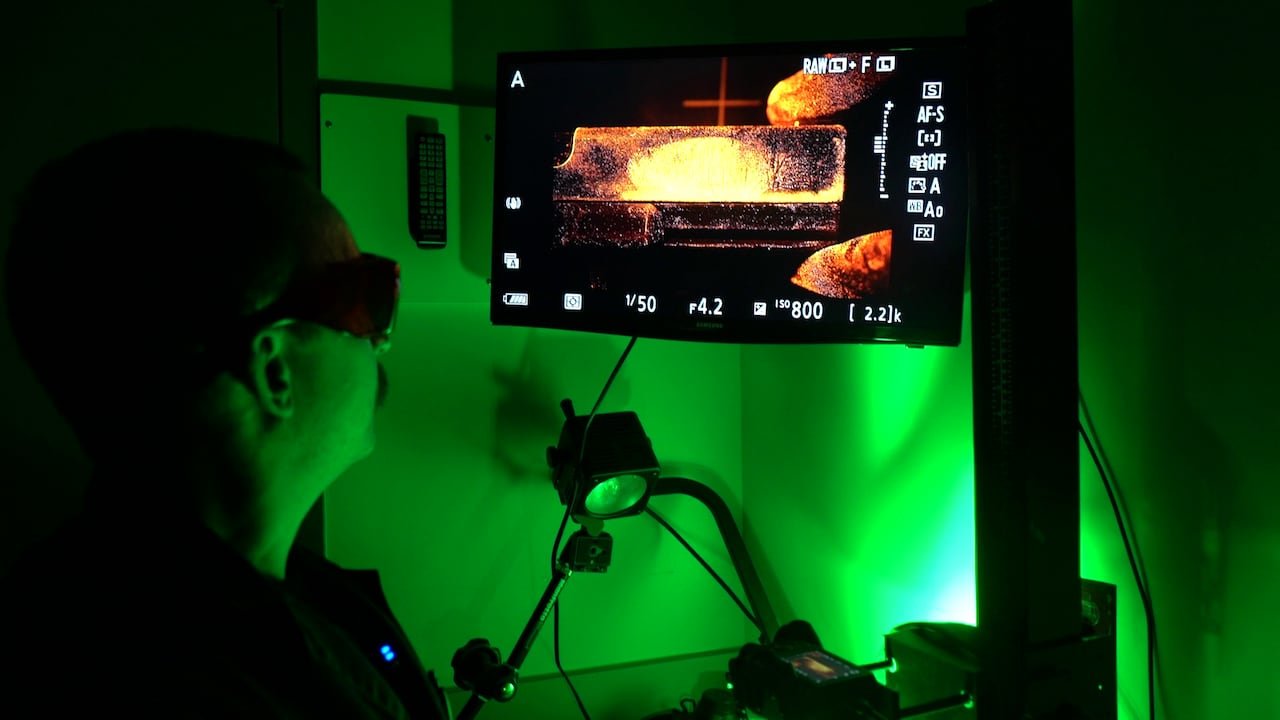
A laser is used to illuminate the fingerprint, causing the powder to fluoresce and reveal a clear print. Walsh mentioned that fingerprints are then compared against the RCMP national database for potential matches.
Identifying Firearms’ Fingerprints
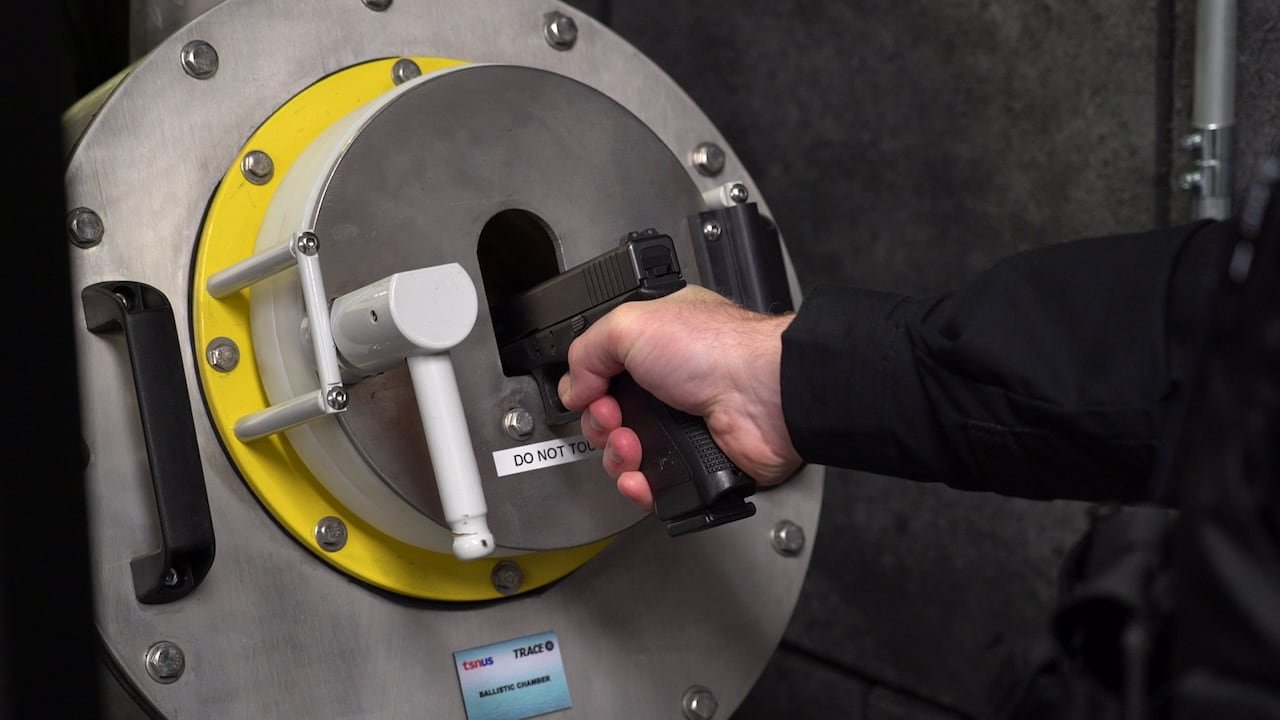
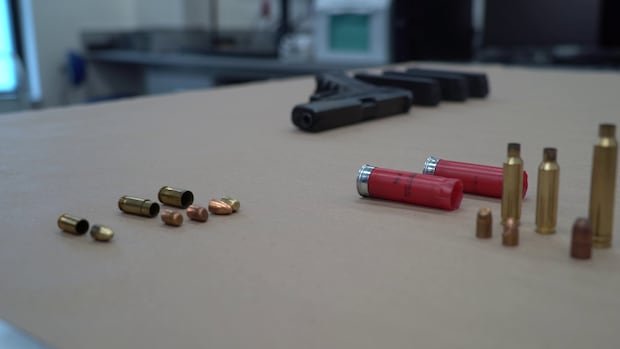
In addition to human fingerprints, firearms themselves leave unique marks that are of interest to law enforcement. Walsh explained that firing a gun in the LPS’s indoor shooting range allows for the preservation of the gun’s fingerprint on fired bullets and casings.
He elaborated that every firing pin strike on a cartridge leaves a distinct mark, while the lands and grooves on a barrel leave individual marks on each bullet. By uploading these unique fingerprints to an international database, investigators can compare them with evidence from other crime scenes to potentially identify matches.