

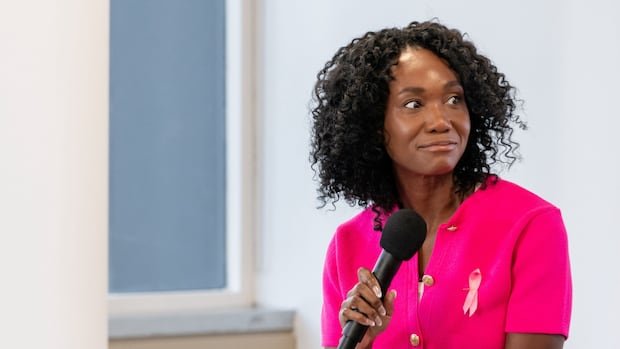

In the summer of 2020, Elysia Bryan, a resident of Toronto, noticed a lump in her right breast. Despite being 34 years old and in good health, she hesitated to seek screening for breast cancer, hoping the lump would vanish on its own. Bryan admitted, “It was noticeable and painful, but I thought it might disappear if I ignored it.” She put off getting checked for months until April 2021 when she consulted her family doctor, who recommended a mammogram and biopsy. The biopsy at St. Michael’s Hospital confirmed her fears of breast cancer, leading to a lumpectomy shortly after.
Following eight rounds of chemotherapy, 24 radiation sessions, genetic testing, mastectomy, and reconstruction, Bryan is now cancer-free and advocates for early breast cancer screening. She emphasized, “Early detection improves treatment outcomes. Delaying diagnosis reduces treatment options significantly.”
Bryan collaborates with The Olive Branch of Hope, a group aiding Black women with breast cancer, where she observes an increasing number of young women being diagnosed with the disease. She stressed the importance of young women prioritizing their health and utilizing available screening options.
Study Reveals Low Uptake in Screening
The Hologic Global Women’s Health Index’s recent study disclosed that only 15% of Canadian women and 25% of American women underwent breast or cervical cancer screenings in the past year. Hologic, in partnership with Gallup, compiled extensive data on women’s health and well-being.
The research highlighted lower screening rates among women with lower incomes, ethnic minorities, and newcomers. A year ago, Ontario lowered the self-referral age for mammograms by 10 years, enabling women in their 40s to schedule screenings without a doctor’s referral. This change aimed to enhance early detection and treatment accessibility, given that one in every nine women in Ontario is affected by breast cancer.
Health Minister Sylvia Jones emphasized, “Early detection and increased treatment access save lives.” However, only around 21% of eligible women aged 40 to 49 in Ontario have undergone screening since the modification.
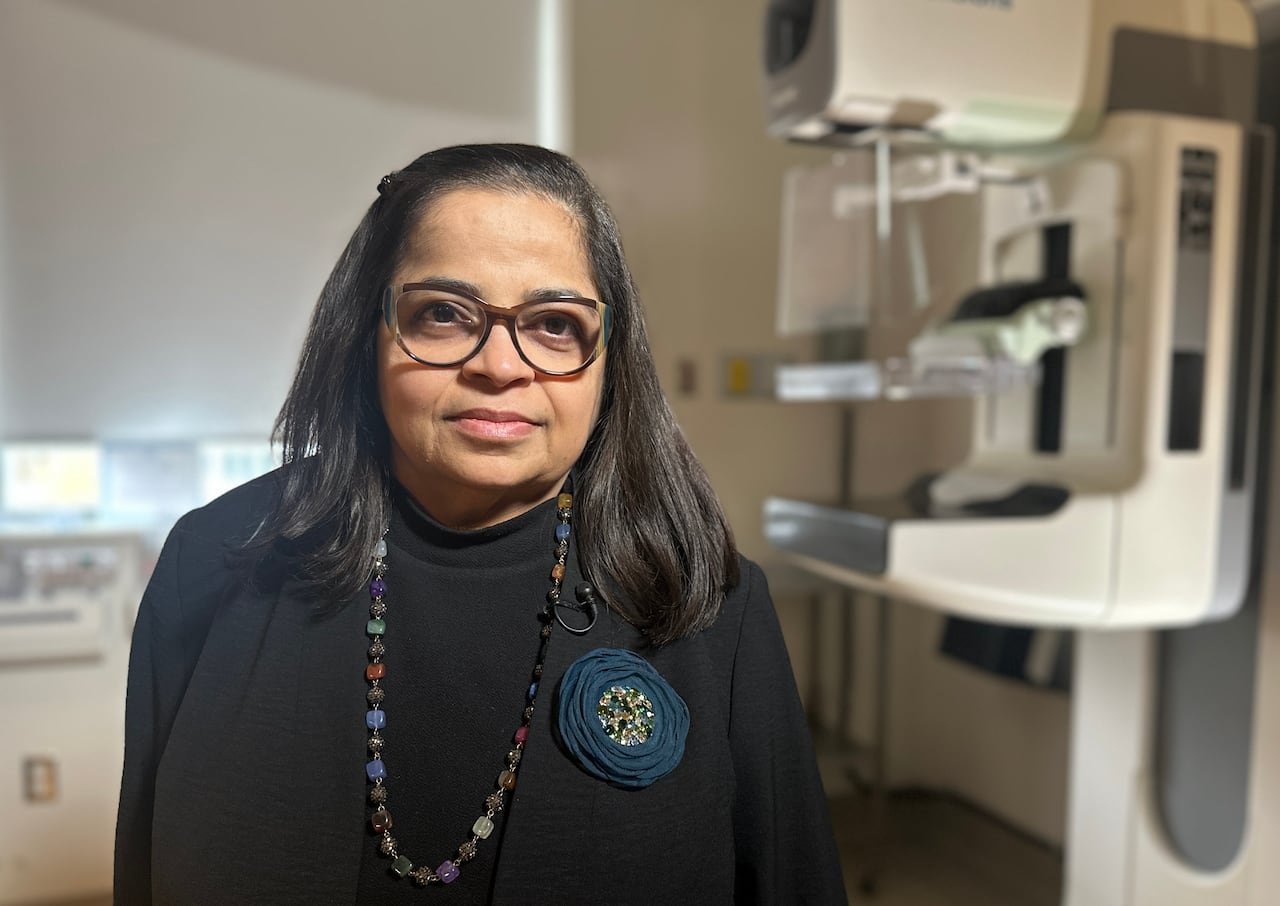
Dr. Supriya Kulkarni, a breast imaging radiologist at University Health Network, mentioned that over 1,000 mammograms were conducted at Women’s College Hospital in the previous year. However, certain communities remain underserved in terms of screenings.
Kulkarni stressed the importance of targeting specific groups and expressed hope that Ontario’s revised guidelines would encourage younger individuals to undergo screenings sooner. She suggested that regular screening every two years should become a standard practice for women.
Efforts to Encourage Screening in Ontario
Dr. Ritika Goel, a Toronto-based family physician, highlighted the disparities in healthcare access, particularly regarding breast cancer screenings for socially marginalized groups. She emphasized the lower screening rates among racialized and immigrant women and the broader issue of social and structural health determinants.
Ontario Health stated that it developed multilingual breast cancer screening materials and conducted webinars to raise awareness about the updated self-referral guidelines. The organization collaborated with prevention specialists to engage in culturally sensitive conversations about breast screenings with over 7,000 individuals from underserved communities.
With advancements making screenings more convenient and comfortable, the goal is to expand outreach, reach more women, and ultimately save more lives through early detection.