

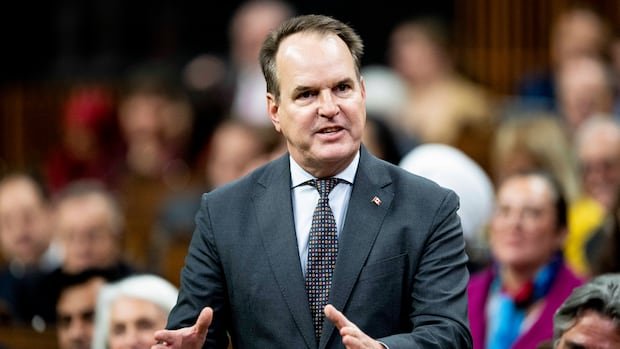

Liberal House leader Steven MacKinnon has highlighted the current lack of sufficient votes within the government to pass the upcoming federal budget. This situation has prompted MacKinnon to urge opposition parties to carefully consider whether they are inclined towards triggering another election.
In an interview on a broadcast of “Rosemary Barton Live,” MacKinnon emphasized the minority status of the Canadian government but stressed that the Liberals have a mandate to advance the country’s economic progress. Given that the budget is a confidence vote, the government will need the support of at least one other party to secure its passage, with the budget set to be presented on November 4.
MacKinnon underlined that opposition parties will need to assess the extent of their differences with the Liberals and determine whether these disparities are significant enough to warrant a potential election. He expressed a reluctance towards heading to the polls, emphasizing the importance of finding common ground.
As the Liberal party works to garner support, various opposition parties, including the Conservatives and the Bloc Québécois, have articulated their demands both publicly and in private discussions with Prime Minister Mark Carney. Conservative Leader Pierre Poilievre has called for an “affordable budget” featuring broad tax cuts and a deficit below $42 billion, along with the removal of the industrial carbon tax.
On the other hand, Bloc Québécois Leader Yves-François Blanchet has advocated for an increase in federal health transfers to provinces, enhanced infrastructure investments, expansion of the rapid housing initiative, and boosted Old Age Security payments for individuals aged 65 to 75. Prior to engaging with Carney, Blanchet criticized the Liberal government for a lack of consultation, asserting the budget lacked legitimacy.
While MacKinnon criticized Blanchet’s remarks, he acknowledged a more constructive stance from NDP Leader Don Davies. MacKinnon differentiated the NDP’s feedback as more positive compared to other opposition leaders, signaling a potential avenue for collaboration.
Carney has been laying the foundation for an anticipated costly budget aimed at bolstering Canada’s economy amid challenges posed by U.S. tariffs. Following discussions with opposition leaders, Carney cautioned Canadians to prepare for challenges and sacrifices, emphasizing the urgency of taking action to alleviate mounting pressures.
MacKinnon acknowledged the necessity of tough decisions ahead, emphasizing the need to strike a balance between government operations and investments. He highlighted the importance of optimizing supply chains to diversify markets away from the U.S. and enhance trade opportunities in other regions.
In conclusion, the upcoming federal budget carries significant weight, requiring collaboration and compromise among political parties to navigate the economic landscape effectively.