


Iran has pledged retaliation following the assassination of its supreme leader and engaged in exchanges with Israel amid an escalating conflict triggered by an unexpected U.S. and Israeli assault. The U.S. military confirmed that three service members were killed, marking the initial American casualties in the conflict.
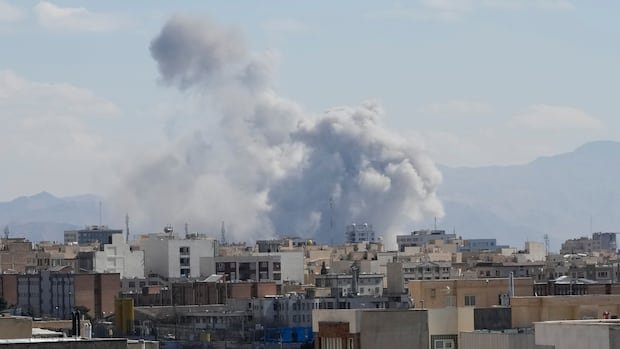
Explosions rocked Tehran, resulting in a massive plume of smoke over government buildings. Iranian officials reported over 200 casualties since the commencement of U.S.-Israeli strikes that led to the death of Supreme Leader Ayatollah Ali Khamenei and other high-ranking figures. Iran retaliated by launching missiles at targets in Israel and Gulf Arab states, while Israel promised continuous strikes against Iran’s leadership and military.
The series of strikes and counterattacks highlight the potential for an extended conflict in the Middle East following the killing of Khamenei and U.S. President Donald Trump’s calls for the overthrow of the longstanding Islamic Republic. This marks the second instance in eight months where the U.S. and Israel have cooperated in military actions against Iran, showcasing a significant display of military power by an American president who campaigned on an “America First” agenda and pledged to avoid prolonged conflicts.
In Tehran, the capital of Iran, there was minimal evidence of Iranians heeding Trump’s call for an uprising against the government. The streets remained deserted as people sought shelter during intense airstrikes. In Israel, loud explosions were heard in Tel Aviv due to missile impacts or interceptions. A strike on a synagogue in Beit Shemesh resulted in nine fatalities and 28 injuries, bringing the total death toll in the country to 11, with 120 wounded.
The U.S. military disclosed that three service members were killed and five others severely injured, with additional personnel sustaining minor shrapnel injuries and concussions. The 12-day conflict in June significantly weakened Iran’s military capabilities, air defenses, and nuclear program through Israeli and American strikes. However, the death of Khamenei, who ruled Iran for over three decades, has created a leadership vacuum, heightening the risk of regional instability.
Iranian President Masoud Pezeshkian announced the establishment of a new leadership council, with Foreign Affairs Minister Abbas Araghchi stating that a new supreme leader will be appointed within the next one to two days.
As news of Khamenei’s demise spread, some individuals in Tehran were seen cheering from rooftops while others mourned, with a black flag raised at the Imam Reza shrine in Mashhad. Iran’s parliamentary speaker, Mohammad Bagher Ghalibaf, issued a televised warning on Sunday, stating that devastating retaliatory actions would be taken against the perpetrators.
Trump cautioned against further retaliation, emphasizing that any such actions would lead to increased escalation. The attack has already sparked unrest in the region, with hundreds storming the U.S. Consulate in Karachi, resulting in clashes that claimed at least nine lives.
As the U.S. and Israel conducted airstrikes on Iran, the Islamic Republic retaliated with missile and drone attacks on Israel and nearby Gulf countries hosting U.S. forces. This conflict has the potential to disrupt global markets, particularly if Iran targets the Strait of Hormuz, a crucial waterway for global oil trade.
While striking U.S. bases in Bahrain and the UAE, Iran’s attacks extended beyond military installations, impacting civilian areas such as a hotel in Dubai and Kuwait’s international airport. Oman reported intercepting projectiles aimed at one of its seaports, resulting in casualties in Gulf countries.
Araghchi blamed the U.S. and Israel for instigating the conflict, urging Gulf countries to pressure the aggressors to cease hostilities. Israeli Defence Minister Israel Katz affirmed that Israel would continue relentless airstrikes against Iran’s military and leadership targets.
The ongoing conflict has disrupted air travel across the Middle East, leading to the closure of airspace in multiple countries and the cancellation of numerous flights. Major airlines and key hub airports in the region have been affected, causing significant disruptions to travel schedules.
Tensions have escalated as the Trump administration deployed a substantial military presence in the Middle East, amid efforts to restrain Iran’s nuclear program and growing internal dissent in the country. Congressional leaders have criticized Trump for initiating military action without prior authorization, although the White House claims to have briefed key lawmakers from both parties in advance.
Despite previous claims of destroying Iran’s nuclear capabilities, the country has been rebuilding its infrastructure, including the production of advanced centrifuges for uranium enrichment, as per U.S. intelligence reports. Iran maintains that its nuclear program is peaceful and has restricted international inspections post the airstrikes.
The conflict has had far-reaching consequences, including thousands of stranded travelers and disrupted commercial air traffic across various regions. Several airports have been closed, with airlines suspending operations until the situation stabilizes, leading to widespread flight cancellations and logistical challenges.