

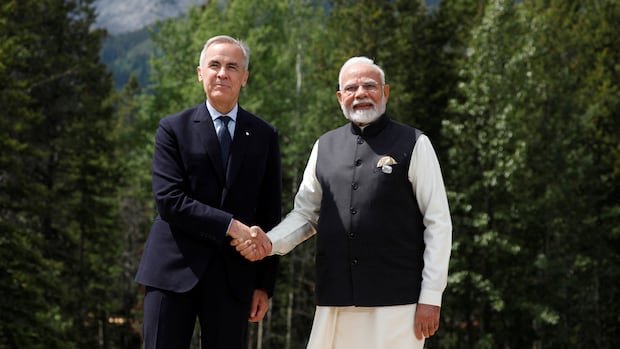

India’s new high commissioner in Ottawa has emphasized that there will be no apology from India for the Nijjar assassination or other violence incidents attributed to New Delhi by Canada, regardless of the warming relations between the two countries. Dinesh Patnaik rejected the allegations made by the RCMP and the Canadian government as baseless during an interview with CBC’s Rosemary Barton Live. Despite mounting evidence contradicting the innocence claims, the upcoming trial in a New York courtroom seems not to hinder the progress in bilateral relations.
Patnaik highlighted the efforts by both Prime Ministers to advance the relationship, following a meeting between Mark Carney and Narendra Modi at the G20 summit in Johannesburg, South Africa. He mentioned discussions across various sectors such as trade, education, and nuclear issues to enhance the relationship that had experienced strained ties.
Although the quick restoration of ties with India is seen as positive by some in Canada, there are concerns within the Sikh community about the implications of this renewed relationship. The community has been facing threats and violence, with Sikh activists receiving warnings from the RCMP about potential dangers to their lives. Some members of the community have reported ongoing extortions and violence, raising questions about the involvement of Indian officials in these activities.
India’s appointment of Parag Jain, who previously served in Ottawa and was associated with monitoring Khalistani terror modules, has raised doubts about India’s intelligence activities in Canada. Despite this, Patnaik emphasized India’s openness about security concerns in Canada and the need for a safe environment for both Canadians and Indians.
The efforts towards reconciliation between India and Canada are progressing, with a focus on cooperation in various areas, including law enforcement. The recent listing of the Bishnoi gang as a terrorist group by Canada was acknowledged positively by India. Both countries are aiming to revitalize their relationship, driven partly by external factors such as challenges posed by the Trump administration.
The growing cooperation between the two nations, including high-level meetings and joint actions against threats, indicates a willingness to move past previous tensions. While challenges remain, there is optimism about the prospects of a strengthened relationship based on pragmatism and mutual interests. The need for vigilance against foreign interference, especially in light of past incidents, remains a priority for both sides.