

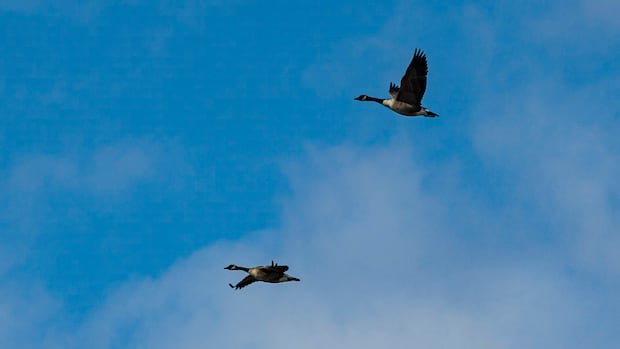

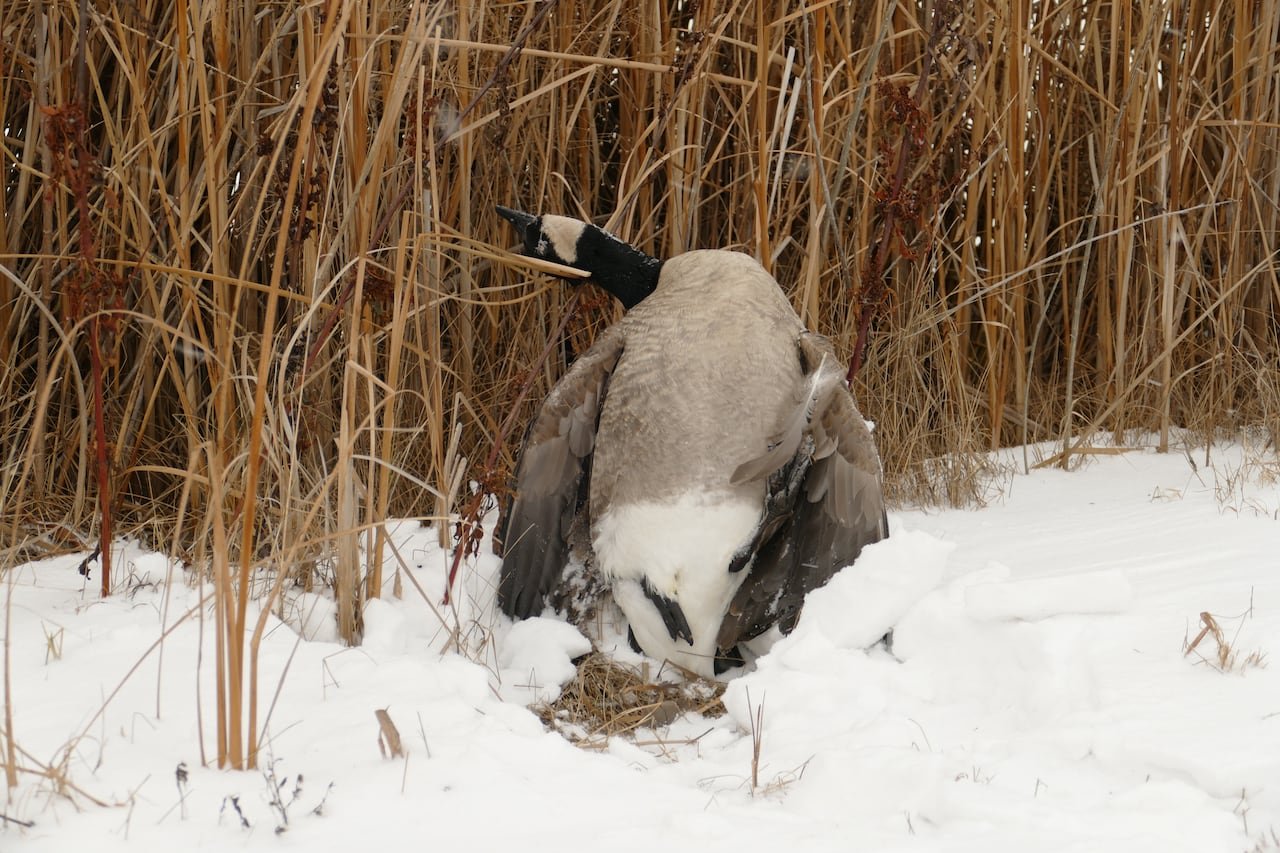
WARNING: This article contains a graphic image of a deceased goose.
A strain of avian influenza that is highly contagious has been identified by the Canadian Food Inspection Agency in various samples gathered in southern Manitoba following an extraordinary mass bird mortality event.
During early December, approximately 500 bird carcasses, primarily Canada geese, were discovered close to water bodies in southern Manitoba. While separate clusters of deceased birds were located near the Red River north of Winnipeg’s Perimeter Highway, the greatest number was found in a collection of ponds in Niverville.
Biologist Frank Baldwin from the Canadian Wildlife Service informed CBC News that after testing positive for avian influenza, the bird samples were sent to the Canadian Food Inspection Agency to ascertain the infection’s strain, also known as bird flu.
An official from the federal agency disclosed to CBC that on December 11, 39 wild bird samples were submitted for testing at the National Centre for Foreign Animal Disease. Laboratory analysis confirmed that 38 of the samples were positive for the highly pathogenic H5N1 strain of bird flu, as reported by the food inspection agency.
Hannah Wallace, a viral immunology researcher at the University of Manitoba, expressed relief that the samples tested positive for H5N1, a strain known for causing significant illness and mortality in birds. She was concerned that the virus may have mutated into a different, potentially more hazardous strain for both birds and humans, as geese had not previously exhibited high mortality rates from avian influenza.

There have been instances of H5N1 affecting humans, raising concerns about the potential consequences of a virus originating from a mixture of avian and human strains, Wallace cautioned.
“This scenario could pose more severe risks to the human population,” she added.
The collected samples tested positive for the prevalent H5N1 strain circulating among domestic poultry and wild bird populations in North America, according to the food inspection agency.
“This outcome was not unexpected,” Wallace remarked. “It aligns with our previous experiences.”
Initial detection of H5N1 in Canada was in late 2021, and Wallace noted that most Canadian birds have already developed some level of pre-existing immunity to the virus.
Weakened or undernourished birds may be more susceptible to contracting H5N1, speculates Wallace, suggesting that this vulnerability could have contributed to the recent bird deaths in southern Manitoba due to prolonged stay in the province during unfavorable weather conditions.
Survival in the environment
Research indicates that avian influenza can persist in the environment even after bird migration, Wallace stated.
While she believes it is improbable that the virus remains in the water where the dead birds were discovered last year, it could possibly endure in pond or river sediment. Despite freezing temperatures, the virus might survive until spring, she cautioned.
Baldwin from the Canadian Wildlife Service highlighted the variable behavior of avian influenza annually, noting that birds sometimes possess a high level of antibodies to combat the virus.
“However, the duration of this protection remains uncertain,” he added.
“It is probable that we will witness some mortality among snow geese and Ross’s geese migrating through Canada en route to the Arctic in April and May,” Baldwin predicted.
<figcaption class="image