

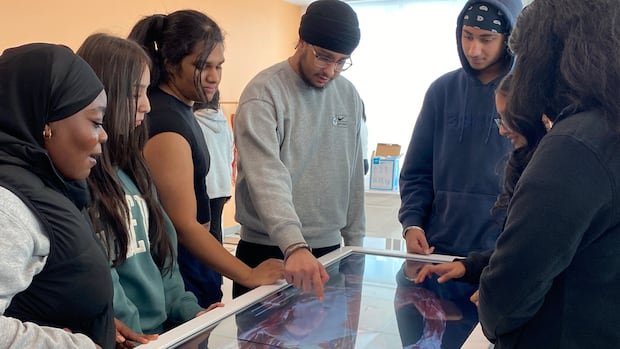

Witnessing the unveiling of digital cadaver layers, a group of high schoolers at Toronto Metropolitan University’s new School of Medicine in Brampton, Ont., transition from amusement to curiosity and amazement. Engaged in hands-on lab activities, around two dozen Peel District School Board co-op students swiftly navigate virtual dissection tables, manipulating 3D models to focus on bones and muscles.
Enthusiastically, 16-year-old Yashita Singh shared her excitement, describing the ability to explore anatomical details and perform virtual dissections, marveling at the interactive experience.
Traditionally, co-op programs at health-care facilities target post-secondary students. However, a shift is occurring to attract high schoolers, aiming to diversify interest, particularly among underrepresented groups, and encourage a deeper understanding of Canada’s health-care system.
Gurmeet Lall, the director of clinical anatomy and simulation at the school, emphasized the significance of high school years in shaping career choices. By incorporating interactive activities during the Peel District School Board visit, Lall aimed to bridge the gap between classroom learning and real-world medical education, hoping to inspire the students to consider a future in the field.
The visit was part of a collaborative co-op course named Equity in the Future of Healthcare, engaging 25 seniors from five schools in a comprehensive exploration of various health-care fields. The program offers firsthand exposure through lectures, lab visits, and interactions with TMU students, contributing to both their high school credits and potential future studies at TMU.
For Yashita Singh, the course has broadened her perspective on health care, allowing her to engage with medical students and contemplate her own path towards medical school.
Haris Ahmad, a first-year TMU medicine student, highlighted the importance of representation in the medical field, underscoring the impact of seeing individuals from similar backgrounds pursuing careers in medicine.
Bridging the gap
In Winnipeg, an Indigenous student placement initiative has been connecting high schoolers with health-care professionals for over a decade, showcasing diverse career opportunities within the sector. The program aims to address the underrepresentation of Indigenous individuals in the health-care workforce, fostering a more inclusive and reflective system.
Similarly, the Equity in Health Systems co-op program in Ottawa seeks to create pathways for underrepresented high school students to explore health-care careers, offering valuable experiences and mentorship to guide them through the complexities of the system.
Representation plays a pivotal role in inspiring students like Morolayo Etti, who co-founded the Ottawa program. Etti’s exposure to health systems during high school provided her with essential skills and insights, shaping her educational and professional journey in engineering.
Greater understanding
While not all participants in health-care co-op programs pursue careers in the sector, the early exposure remains valuable in fostering a deeper understanding of Canada’s health-care landscape. Peel student Aisha Adebisi, initially motivated by a desire to explore equity and privilege, found herself drawn to nursing through the PDSB-TMU course, emphasizing the transformative impact of experiential learning on her career aspirations.