


Guadalajara’s renowned birote bread has a unique origin story that dates back to the late 1800s when a Belgian baker attempted to make baguettes without understanding how yeast would behave in the city’s high altitude, according to Perla Montes de Oca, whose family established El Pesebre restaurant, now a well-known local chain.
The signature bread, characterized by a crispy crust and soft interior, serves as the base for El Pesebre’s popular “star” sandwich featuring lightly marinated pork leg, avocado, tomato, onion, jalapeño slices, and a hint of local cream.
Montes de Oca emphasized the bread’s irreplicability elsewhere, attributing it to the specific chemical reactions of yeast unique to Guadalajara. El Pesebre’s main restaurant is located northeast of the city’s historic center, adjacent to the old Jalisco stadium that hosted matches during the 1986 World Cup, adorning its walls with soccer memorabilia.
With preparations underway for the upcoming FIFA World Cup 2026, Guadalajara, the capital of Jalisco, faces recent uncertainties following a surge of violence on February 22 that reverberated across the city and the state, prompting concerns about safety and security.
Although the city has since calmed, the incident served as a stark reminder of the prolonged conflicts involving state entities and criminal factions, resulting in numerous disappearances and the discovery of human remains near the newly constructed stadium.
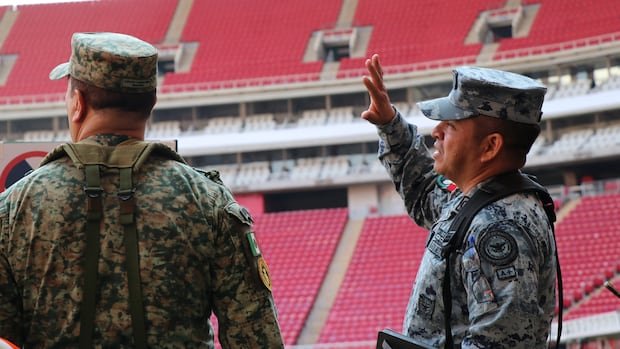
Despite visible signs of recovery, including the presence of military and law enforcement patrols, a sense of unease persists among residents, fearing a resurgence of violence in the region.
While acknowledging these concerns, both Montes de Oca and Gustavo Staufert, vice-president of Jalisco’s tourism board, expressed confidence in the security measures in place for the World Cup, reassuring visitors, including Canadians who form a notable portion of the region’s tourists, that the event will proceed safely.
Government officials at both the state and federal levels have echoed these sentiments, emphasizing Mexico’s commitment to ensuring a peaceful environment for the tournament. However, for many families in Jalisco, peace remains elusive, with unresolved cases of disappearances and a persistent lack of accountability from authorities.
Héctor Flores González’s ongoing search for his missing son symbolizes the plight of numerous families in the state, forming collectives to demand justice and accountability for the thousands who have disappeared in the region. Amidst the preparations for the World Cup, these families continue to advocate for the truth and recognition of the human rights issues that persist in Jalisco.
As the world looks towards the upcoming sporting event, the juxtaposition of the celebratory atmosphere surrounding the World Cup with the somber realities faced by many in Jalisco underscores the complexities and challenges that define the region’s current landscape.