

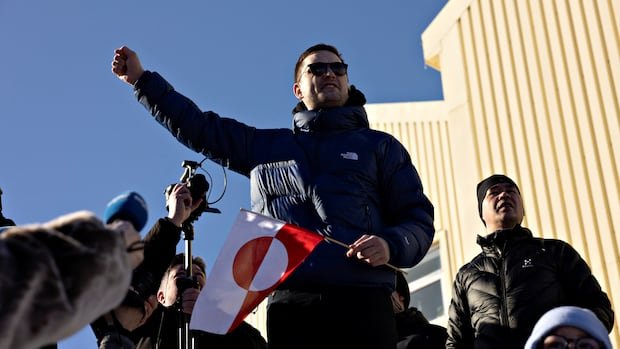

Karla Jessen Williamson was only 11 years old when she was moved from Greenland to Denmark for schooling in the 1960s as part of various colonial policies imposed on Greenlanders. Over the years, Greenland has gained more independence from the Kingdom of Denmark. However, recent statements from U.S. President Donald Trump regarding potential control over Greenland have drawn the autonomous territory closer to its colonizing country.
This situation has stirred mixed emotions among Greenlanders like Williamson, who previously served on Greenland’s Reconciliation Commission and is currently an associate professor in education at the University of Saskatchewan. She expressed, “I would say that the Greenlanders are very much caught up with this Stockholm syndrome where you have no other place to go but to go to old relationships and try to do something about that situation. But I do know that the sentiment is very much like that of we don’t want to be Americans, and we are not Danes either.”
Greenland, with a population of 57,000, has been under the Kingdom of Denmark’s rule for nearly 300 years. In 1953, its colonial status was officially abolished, and in 2009, it was granted an expanded form of self-governance. While Denmark still oversees Greenland’s foreign affairs and defense policy, and the Danish krone remains the currency, the self-government act outlines a pathway for Greenland to achieve independence. In 2023, a Greenlandic Constitutional Commission proposed strategies for progressing towards independence.
Trump’s recent aggressive stance towards Greenland has caused concern, but individuals like Aaju Peter remain optimistic that this could elevate the importance of the discussion once the threats subside. Peter, a lawyer from Greenland now residing in Iqaluit, believes that work towards independence will continue, but currently, there is a unified effort with Denmark.
The United States’ military interest in Greenland is not new, dating back to the Second World War when a treaty was signed in 1941 to grant the U.S. military access to protect Greenland from Nazi occupation. Subsequently, the treaty was updated in 1951 under NATO to establish a legal framework for U.S. military bases on the island. During the Cold War, the U.S. operated numerous military bases in Greenland, with one still in operation today.
Sara Olsvig, chair of the Inuit Circumpolar Council, emphasizes the importance of Greenland’s participation in western NATO alliances while also stressing the significance of upholding international law, democracy, and human rights. She highlights climate change as the most significant threat to Greenland’s security, requiring global cooperation.
Looking ahead, there are various paths for Greenland’s governance, including independence with its constitution or a free association model with Denmark. Despite the discussions, Olsvig believes that Greenland’s politicians are not contemplating severing ties with Denmark entirely, aiming for an independent state while maintaining a cooperative relationship.