

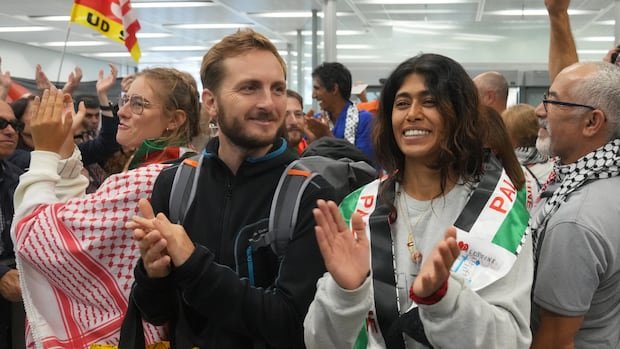

A member of the European Parliament from France with Palestinian descent shared online that she faced a denial of entry into Canada just days before her scheduled participation in Montreal conferences. Rima Hassan expressed that she felt “prevented” from traveling to Canada, labeling it as an act of censorship.
Reports from the far-left party La France Insoumise indicate that Hassan initially received approval for her electronic travel authorization from Canadian authorities, but it was later revoked on a Friday. The Canadian authorities cited her alleged failure to disclose a previous visa denial, an arrest or conviction, and a previous entry denial to Israel as reasons for the refusal.
The party believes the denial is linked to Hassan’s past entry issues with Israel and complaints against her due to her outspoken pro-Palestinian stance and criticism of Israel. Despite being barred from physically attending, Hassan vowed to proceed with her conference participation remotely, emphasizing the importance of parliamentary action and freedom of expression.
Organizations in Montreal, including Alternatives, Independent Jewish Voices, and Quebec Doctors Against Genocide, had invited Hassan to Canada. She virtually attended a news conference organized by these groups and announced that she would address the conferences remotely, refraining from taking questions until her appearance at one of the conferences on Tuesday.
NDP MP Alexandre Boulerice raised concerns over the sudden reversal by Canadian authorities, suggesting a political motive behind the decision. Boulerice speculated that the denial could be a punitive action against Hassan for her strong positions on Palestinian issues, Gaza genocide, and West Bank ethnic cleansing. He expressed suspicions of political interference to prevent potential controversy.
Calls for transparency and explanation from the Canadian government were made by Quebec Solidaire legislature member Andrés Fontecilla and advocacy groups following the incident. Sophie Zhang from Quebec Doctors Against Genocide criticized the inconsistency of allowing Israeli military members into Canada while denying entry to an elected French parliament member based on political views.
The Canada Border Services Agency declined to provide further details on individual immigration information, citing privacy concerns. Jewish advocacy groups, including B’nai Brith, supported the decision to deny Hassan entry, attributing it to shared information with the CBSA. B’nai Brith commended the swift action taken by Canadian authorities and emphasized Canada’s stance against terrorism and violence.
CIJA echoed support for denying Hassan entry but expressed disappointment that the conferences would proceed despite the refusal. The situation sparked debates around censorship, democratic principles, and the free exchange of ideas, prompting further scrutiny and calls for clarity on the decision-making process.