

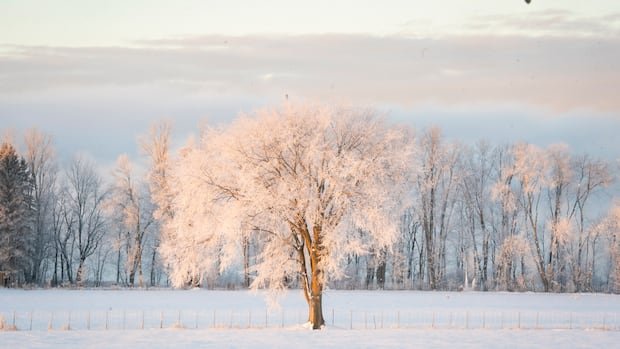

In the early days of 2026, amidst the ongoing events, an unexpected concern arises about freezing temperatures leading to exploding trees in Canada and the northern U.S. regions. The cold wave has brought temperatures plunging below -20°C, with wind chills dropping even further in certain areas. This drastic weather shift is attributed to a disruption in the polar vortex, pushing Arctic air southwards into the U.S. Deep South.
While social media buzz speculated about trees exploding in multiple states due to the extreme cold, official sources have clarified that this scenario is exaggerated. The plummeting temperatures pose a serious risk to residents and are expected to contribute to a significant winter storm spanning nearly 30 states over the weekend. However, the notion of trees spontaneously exploding is debunked by experts.
Frost cracks, a phenomenon triggered by a sudden and severe drop in temperatures, are cited as the actual cause behind the tree-splitting noise resembling an explosion. When the internal water and sap freeze rapidly due to the abrupt chill, the resulting expansion exerts physical pressure on the tree, leading to splits and branch breakage. While these cracks do not harm the tree and typically heal in warmer weather, repeated occurrences can leave lasting scars on the trunk.
Certain tree species, particularly hardwood ones like elm, poplar, maple, oak, and fruit-bearing trees, are more susceptible to frost cracks during winter. Non-native tree varieties are at higher risk during rapid cold snaps, whereas native trees have evolved to withstand freezing conditions. Despite sensational social media portrayals, severe tree damage from extreme cold is rare, with most cracks going unnoticed by the general populace.
Apart from exploding trees, the bitter cold can also trigger other dramatic phenomena such as frost quakes and thundersnow. Frost quakes occur when underground water freezes rapidly, leading to ground pressure and cracks, sometimes causing significant vibrations akin to earthquakes. Thundersnow, a rare occurrence in winter storms, results from the clash of warm moist air near the surface with cooler upper atmospheric air, producing thunder-like sounds accentuated by falling snow.
Overall, while the cold snap may create startling events in nature, the risk of trees exploding due to extreme temperatures is minimal, with experts emphasizing the resilience of most trees to survive harsh winter conditions.