

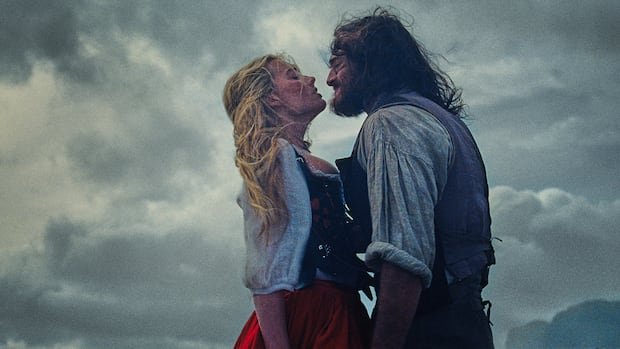

The speculation surrounding filmmaker Emerald Fennell’s adaptation of Emily Brontë’s “Wuthering Heights” is indeed accurate. Notably, the film’s title includes quotation marks intentionally, as emphasized by the movie’s publicity team. This unique formatting choice signifies Fennell’s approach to the project as a reimagining of personal recollections rather than a traditional adaptation.
The movie presents a visually captivating, dreamlike portrayal of the ill-fated love affair between brooding orphan Heathcliff (Jacob Elordi) and the enchanting estate owner’s daughter, Catherine (Margot Robbie). Despite its striking visuals, the film’s departure from the original narrative raises concerns. Rather than modernizing the story, Fennell’s rendition appears to misinterpret or even distort the essence of “Wuthering Heights.”
One of the contentious modifications is the casting of Elordi, deviating from the novel’s depiction of Heathcliff with a non-traditionally white appearance. While previous adaptations featuring white actors in this role exist, Brontë’s deliberate ambiguity about Heathcliff’s racial background underscores themes of social hierarchy and marginalization. Fennell’s decision to reinterpret the character based on her personal vision alters the narrative’s fundamental dynamics.
Significant deviations from the source material persist throughout the film, notably in the exaggerated focus on the doomed romance between Heathcliff and Catherine. This amplification shifts the narrative’s balance, overshadowing other crucial plot elements and diluting the original story’s depth and complexity.
While creative liberties in adaptations are common, Fennell’s reimagining of “Wuthering Heights” seems to disregard Brontë’s thematic nuances and character motivations. The film transforms a tale influenced by the Romantic era into a melodramatic blend of genres, straying far from the original work’s essence.
In essence, Fennell’s rendition of “Wuthering Heights” offers a stylized and unconventional take on the classic novel. However, the film’s departure from the source material’s core themes and characterizations raises questions about its effectiveness as a faithful adaptation.