

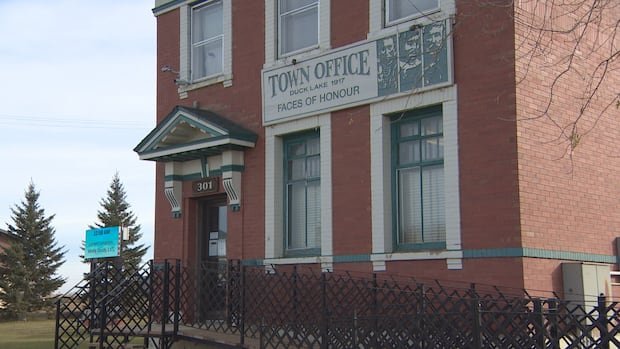

A movement known as “Duck Lake Forever” has been initiated to safeguard the historical town’s name. The campaign arose following the mayor’s recent proposal to sell the naming rights of the town, situated around 80 kilometers northeast of Saskatoon and home to approximately 580 residents.
The town derived its name from the First Nations’ term “See Seep SaKayegan,” reflecting the abundance of migrating ducks in the area during spring and fall seasons. Duck Lake holds significance as the main site of the 1885 Battle of Duck Lake, a pivotal event in the Northwest Resistance led by Louis Riel.
Adam Carriere, a resident, alongside his partner, launched Duck Lake Forever to oppose the naming rights sale plan. They are promoting an online petition that has garnered hundreds of signatures as of Monday. The petition emphasizes that altering the town’s name would erase a part of Duck Lake’s Métis heritage and identity, which they believe is a legacy deserving preservation for future generations.
Concerns have been raised about potential repercussions if a deal with a private entity materializes, with fears that unfulfilled promises could burden residents with costs for new signage and rebranding efforts. Carriere stressed the importance of the Battle of Duck Lake in the town’s history, noting the pride Métis residents take in residing in such a historically significant location.
Organizers of the movement intend to take their cause to the council and advocate for a community vote on the matter. Mayor Jason Anderson mentioned that revenue generated from selling the naming rights would be directed towards infrastructure repairs, subject to approval in a referendum among residents.
Denis Poirier, a former mayor of Duck Lake, who spent over five decades in the town, expressed support for the petition, emphasizing the town’s deep-rooted history and the practical challenges a name change would pose for residents. Poirier highlighted the extensive administrative tasks and costs involved in updating various personal documents if a name change were to occur.
Despite the mayor’s proposal being viewed as a creative approach, marketing expert Marvin Ryder from McMaster University doubted its practicality. Ryder cited rare instances in the US where towns changed their names for promotional purposes, suggesting that the mayor’s idea might be more of a publicity stunt rather than a feasible solution for infrastructure funding.
While acknowledging the town’s innovative approach, Ryder questioned the mayor’s seriousness in pursuing the naming rights sale, hinting that it could be a tactic to draw attention or pressure the government. He advised that alternative methods should be explored to support smaller communities in infrastructure development.