

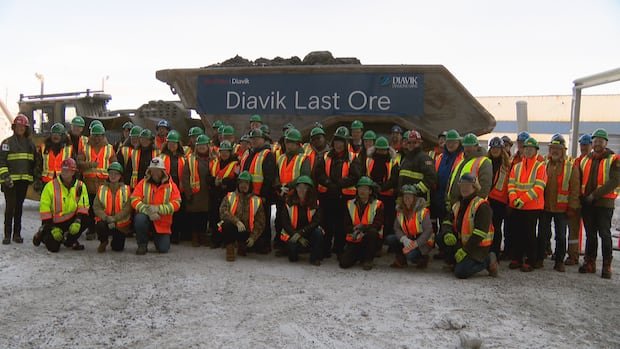

A well-established mine in the Northwest Territories is ceasing its operations and transitioning towards a focus on remediation. The Diavik diamond mine, located around 300 kilometers northeast of Yellowknife, has been in production for many years, yielding over 150 million carats of diamonds, as reported by Rio Tinto, the mine’s owner. On Tuesday, the mine permanently closed its doors.
Throughout its existence, the Diavik mine has employed hundreds of individuals, with a peak workforce exceeding 1,000 employees. While not all workers are local to the area, some, like Sean Sinclair from Ontario, have chosen to make the Northwest Territories their home. Sinclair, who initially joined Diavik while pursuing his master’s degree, now holds the position of closure manager at the mine and has been living in the region for over a decade.
Sinclair’s story is not unique, as he met his wife in Yellowknife, who also happens to work at Diavik. The couple expressed their love for the city and their lack of plans to relocate anytime soon. Similarly, Mike Lowing, the principal adviser for health, safety, and environment at Diavik, who has resided in Yellowknife since 1974, sees a promising future for the city despite the challenges posed by the closure of diamond mines.
The closure of Diavik will impact various communities across the territory. However, with Prime Minister Mark Carney’s recent announcement of a $35-billion investment plan for the North, including support for projects like the Mackenzie Valley Highway and the Taltson hydro expansion, new opportunities are on the horizon. Lowing expressed interest in contributing to these projects, emphasizing the potential for job opportunities for Northern residents.
While the Diavik mine is halting its operations, some, like Alex Clinton, a senior adviser at Diavik with a long history in Yellowknife, believe that mining should continue in the region. Clinton is optimistic about the mining prospects in the territory, particularly in gold mining, given the increasing demand for the precious metal. Yellowknife’s rich history in gold mining further supports this notion, with recent developments indicating a resurgence in the industry.
One such development includes the reopening of the Mon Mine, located about 45 kilometers north of Yellowknife, which is set to resume operations after nearly three decades of dormancy. The surge in gold prices in early 2026, reaching over $5,000 US per ounce, has reignited interest in gold mining in the region. Clinton, who envisions a bright future for mining in the territories, hopes that his children will have opportunities to follow in his footsteps within the industry.