

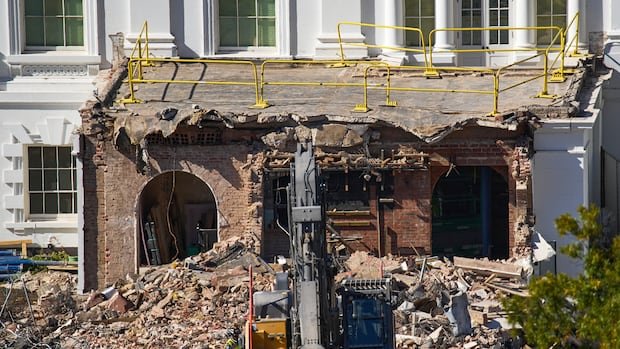

The Democratic Party has pledged to investigate the progression of the White House demolition under President Donald Trump’s administration, which has rapidly advanced, sparking social media posts mourning the fate of the East Wing. Construction work on the East Wing, constructed over a century ago during President Teddy Roosevelt’s tenure, had substantially progressed by Thursday, just three days after commencement. This section of the White House historically served as the domain of the president’s spouse and the entry point for public tours and events like state dinners.
Simultaneously, the White House disclosed a roster of contributors on Thursday who are financing the construction of a forthcoming ballroom on the premises. The administration assures that this project will not burden taxpayers, with the funds coming from private donors. However, critics argue that seeking donations from the private sector raises ethical concerns.
Democratic House leader Hakeem Jeffries denounced the fundraising approach, accusing Trump of engaging in a significant pay-to-play scheme and potentially soliciting donations from parties with vested interests in governmental matters. Jeffries asserts that Democrats will demand accountability and probe the circumstances surrounding the demolition, although the current Republican-led House limits their investigative powers until the upcoming midterm elections.
While specific donation amounts remain undisclosed, tech giants such as Amazon, Apple, Meta, and Alphabet were among the contributors named by the White House on Thursday. Various foundations and individuals with longstanding ties to Trump were also listed. Donors have the option to provide a lump sum or spread their contributions across three installments by 2027.
Noteworthy contributors like Lockheed Martin and Carrier have expressed their gratitude for the opportunity to support the ballroom project. The donations come amidst Trump’s second term, during which his administration has exerted pressure on various entities for concessions or actions aligning with preferred policies. Reports suggest that some donors, including Micron Technology, already benefit from federal incentives for other projects.
The proposed 90,000 square-foot ballroom marks a significant structural alteration to the White House, the most substantial in nearly eight decades. Trump and White House press secretary Karoline Leavitt initially indicated that the project would not necessitate a teardown. However, the estimated cost has fluctuated in recent months, with the capacity of the ballroom expanding from 650 seats to nearly 1,000.
The demolition of the East Wing has stirred controversy, with House Democrats urging the White House to address concerns regarding lack of public consultations and adherence to established procedures. Critics question the legitimacy of the demolition process and highlight deviations from precedents set by past administrations. Despite evolving cost estimates and shifting project details, the administration maintains transparency claims but has provided limited information on the impact of the demolition on critical facilities like the President’s Emergency Operations Center.
While some congressional Republicans have lauded the ballroom project, concerns have been raised regarding its timing amidst ongoing government shutdowns and economic challenges. Public opinion on the demolition varies, with tourists expressing curiosity and diverse perspectives on the allocation of resources during a time of economic uncertainty.