

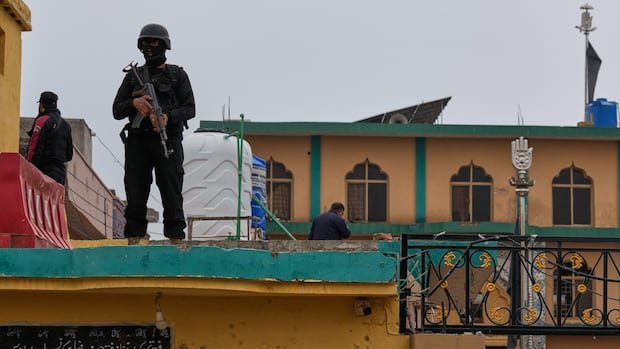

A massive explosion devastated a Shia mosque on the outskirts of Pakistan’s capital during Friday prayers, resulting in 31 fatalities and leaving at least 169 individuals injured, as reported by the police. The Islamic State group later claimed responsibility for the attack via a statement on Telegram.
Authorities in Islamabad initially confirmed the mosque blast as a deliberate attack and initiated an investigation. Rescuers and witnesses observed critical injuries among the wounded individuals, with some in dire condition. Footage from television broadcasts and social media posts depicted the efforts of police and residents in transporting the injured to nearby medical facilities.
Pakistan’s Interior Minister, Moshin Naqvi, disclosed on Saturday that four individuals suspected of aiding the suicide bomber had been apprehended. Naqvi stated during a press briefing that following raids in Peshawar and Nowshera, the authorities had detained these individuals, including the alleged mastermind.
Eyewitness accounts from the scene described a distressing scenario, with bodies and injured persons strewn across the mosque’s carpeted floor. Hussain Shah, present in the mosque courtyard during the incident, recounted hearing a sudden loud explosion, prompting him to rush inside where he encountered chaos, with wounded individuals crying out for assistance. Shah estimated around 30 bodies inside the mosque, indicating a higher number of wounded.
The surge in militant violence in Pakistan in recent months has been attributed primarily to Baloch separatist groups, the Pakistani Taliban (Tehrik-e-Taliban Pakistan, or TTP), and an active regional affiliate of the Islamic State group. Pakistani Defence Minister Khawaja Mohammad Asif reported on social media that initial findings suggested the suicide bomber had traveled to and from Afghanistan. Asif mentioned that the mosque’s security guards attempted to stop the suspect, leading to gunfire and the detonation of explosives amidst worshippers.
In response to the attack, Afghanistan’s Ministry of Foreign Affairs issued a statement condemning the assault on sacred rituals and worshippers. The international community, including the United States and European Union, also expressed condolences and denounced the violence. Pakistan’s President and Prime Minister condemned the attack, emphasizing the need to identify and punish those responsible while providing medical aid to the injured.
The incident occurred as Uzbekistan President Shavkat Mirziyoyev visited Islamabad for an official two-day trip, attending an event with Prime Minister Shehbaz Sharif. The latest attack in Islamabad follows a series of recent assaults, including the outlawed Baloch Liberation Army’s deadly operations in Balochistan province, resulting in significant casualties on both sides.
Notable past attacks in Islamabad include the 2008 suicide bombing at the Marriott Hotel, which claimed 63 lives, and a November bombing outside a court that resulted in 12 fatalities and 27 injuries. Security forces have been engaged in countermeasures against militant groups, with recent clashes in Balochistan resulting in the deaths of over 200 “terrorists,” as reported by the military.