


Advocates are expressing concerns over the Manitoba government’s initiative to confine individuals under the influence of long-lasting substances like methamphetamine in a Winnipeg detox center for up to 72 hours, citing potential risks for marginalized communities.
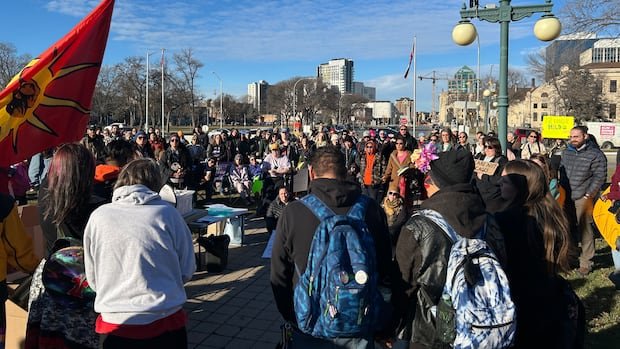
A sizable crowd of over 100 demonstrators congregated outside the Manitoba Legislative Building in downtown Winnipeg on Sunday to urge the government to reconsider Bill 48, which extends the duration of detainment for highly-intoxicated individuals from 24 to 72 hours.
The legislation successfully passed through the Legislature earlier this month. The province recently provided media with a tour of the 20-room detention facility at 190 Disraeli Fwy., slated to open by month-end, with plans for an additional 20 rooms in the future.
Monica Ballantyne, the organizer of the rally, criticized the government for hastily implementing the measure without adequate community input, expressing concerns about potential fatal withdrawal symptoms for substance users.
Ballantyne emphasized the potential dangers of detaining individuals, suggesting it could lead them to use drugs in isolation, consequently increasing the risk of overdosing. She highlighted personal experiences to underscore her apprehensions.
In response, Addictions and Homelessness Minister Bernadette Smith defended the purpose of the new detox center as ensuring safety during critical moments of intoxication and psychosis. Smith emphasized the availability of comprehensive support services and post-center connections for individuals.
Critics at the rally questioned the adequacy of health and addiction support services at the facility and raised issues concerning culturally appropriate care for Indigenous members. Health officials assured the presence of on-site paramedics and enhanced health supervision compared to the existing 24-hour facility.
Individuals seeking admission to the detox site must first obtain clearance from a hospital. Joseph Fourre, founder of the Singing Red Bear Foundation, expressed disappointment upon viewing facility images, likening it to an institutional setting rather than a place conducive to recovery.
Fourre criticized the province’s approach as lacking compassion and advocated for strategies that reduce treatment center wait times and enhance addiction care accessibility. He expressed concerns that individuals exiting the center may face worsened conditions than upon entry.
Smith maintained that the facility aims to prevent harm, protect the public, and offer a care pathway for vulnerable individuals. However, Ballantyne remained skeptical of the center’s efficacy in ensuring community safety and fostering recovery among detainees.