

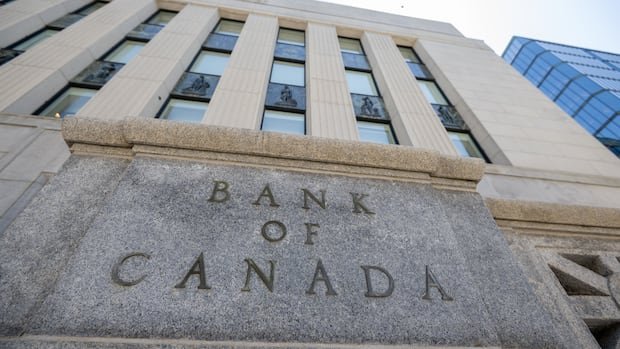

Canadian businesses are feeling slightly more positive about current conditions compared to earlier this year, but they are hesitant to increase investments or hiring due to the impact of U.S. tariffs, according to a recent survey released by the Bank of Canada.
The quarterly business outlook survey, closely monitored by the central bank and economists, provides insights into Canadian companies’ expectations regarding inflation, sales, and recruitment.
Despite some improvement in business sentiment compared to earlier in the year, the survey indicates that tariffs and trade tensions are still casting a shadow over the outlook for many firms. The overall business outlook indicator, which summarizes business activity, prices, costs, and capacity, rose to -2.28 in the third quarter from -2.40 in the previous quarter.
The survey, conducted between August 7 and September 3, revealed that firms are not anticipating a significant boost in sales growth in the upcoming year, primarily due to the ongoing impact of tariffs on demand. However, there was a slight improvement in the balance of opinion regarding future sales.
Concerns about a potential recession in the next year have risen slightly, with 33% of firms expressing such worries, up from 28% in the second quarter. This apprehension about a downturn has offset some of the gains in business sentiment, as highlighted by the Bank of Canada.
The survey also indicated that many businesses are holding off on additional investments in capacity expansion and are maintaining cautious hiring plans, largely due to the influence of tariffs. This cautious approach is reflected in the decision-making processes of firms.
The release of the survey precedes the Bank of Canada’s upcoming announcement on interest rates and quarterly economic projections. Market indicators suggest a high probability, around 77%, of a 25-basis-point rate cut.
Inflation expectations for the next year are around three percent in the third quarter, similar to the previous quarter. However, businesses are reporting notable cost pressures, with expectations of increased input prices over the next 12 months outpacing the previous year’s pace, while wage growth projections for the next 12 months are on a downward trend.
Additionally, a separate survey on consumer expectations conducted by the central bank showed a slight decrease in the percentage of Canadians expecting a recession in the next 12 months, dropping from 64.4% in the second quarter to 64.1%.