

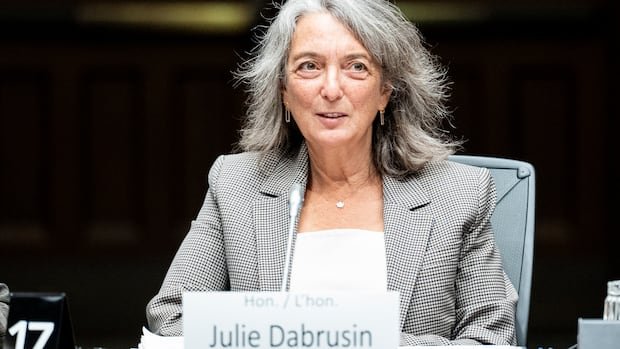

The federal environment minister assured a group of MPs on Monday that the Liberal government is unwavering in its commitment to achieving the 2030 emissions-reduction targets, following a recent agreement with Alberta on a new bitumen pipeline.
Julie Dabrusin faced questions from Conservative and Bloc Québécois members during her appearance before the House of Commons environment committee, with concerns raised about environmental policies and climate change efforts.
When Bloc MP Patrick Bonin inquired in French whether Canada would adhere to the 2030 greenhouse gas emissions target, Dabrusin affirmed the commitment, emphasizing the ambitious nature of the goal.
Despite challenges, Dabrusin reiterated the government’s dedication to working towards the set targets, acknowledging the continuous effort required to meet them.
Since 2015, the Liberal government has been aligned with the Paris Agreement objectives to reduce greenhouse gas emissions by 40 to 45 percent below 2005 levels by 2030.
The Canadian Net-Zero Emissions Accountability Act mandates an annual update on climate progress, with Dabrusin acknowledging the ongoing work needed to attain the 2030 reduction target.
Regarding a recent memorandum of understanding (MOU) signed by Prime Minister Mark Carney and Alberta Premier Danielle Smith for a bitumen pipeline to the B.C. coast, Dabrusin highlighted the connection to the Pathways Plus carbon capture project to potentially mitigate emissions from the oilsands.
In response to queries on the pipeline’s impact on emissions and climate change, Dabrusin emphasized the need for collaboration with Alberta, B.C., and affected First Nations for approval, declining to confirm direct support for the pipeline.
Conservative MPs sought clarity on potential veto powers by B.C. or First Nations, to which Dabrusin emphasized the MOU’s requirements and the need to achieve various benchmarks before final decisions are made.
Addressing concerns about the electric vehicle (EV) mandate, Dabrusin mentioned the ongoing review of the policy, initiated after industry feedback and challenges faced due to external factors like tariffs and market conditions.
She refrained from stating a personal stance on removing the mandates, underscoring the government’s commitment to completing the review before revealing the updated policy.