

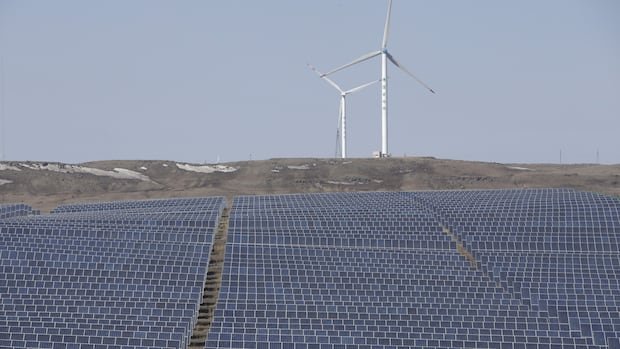

In the vicinity of China’s Gobi Desert, advanced wind turbines managed by artificial intelligence are generating electricity at a lower cost compared to coal power plants. Lei Zhang, the innovative mind behind this technology, is now looking to implement a similar model in remote areas of Canada. As the billionaire founder of Envision, a leading green energy company based in Shanghai, Zhang is renowned for his ability to inspire enthusiasm for cutting-edge energy solutions and effectively bring these visions to life.
During a recent visit to Envision’s headquarters in China, Zhang unveiled plans that could potentially address Canada’s upcoming energy challenges by leveraging Chinese AI technology. While these proposals offer solutions for Canada’s energy needs, concerns have been raised about the implications of relying on Chinese technology, which could potentially give China control over Canada’s power grid.
With the cost of renewable energy production dropping significantly in recent years, Zhang highlighted that China has reached a significant milestone where building new solar and wind facilities is now more cost-effective than operating existing coal plants. He emphasized that green energy solutions powered by artificial intelligence have transformative potential, akin to the impact of ancient Chinese paper-making technology on knowledge dissemination.
Envision’s flagship project, located in China’s Inner Mongolia region, showcases the effectiveness of AI-driven renewable energy systems. The off-grid facility, operational since July 2025, utilizes wind turbines to produce net-zero hydrogen and ammonium. Plans are underway to establish an 800-kilometer pipeline to transport green hydrogen to urban centers for clean power generation, bypassing aging transmission infrastructure.
Zhang affirmed the possibility of replicating this model in Canada, leveraging the country’s vast natural landscapes for off-grid energy projects. His discussions with Canadian Prime Minister Mark Carney and various stakeholders in Canadian provinces indicate a growing interest in adopting advanced renewable energy solutions.
Despite China’s strides in renewable energy, the country continues to expand its coal power capacity. Greenpeace has cautioned against the coexistence of renewable energy deployment and coal expansion in China, emphasizing the need for a clear timeline to phase out coal power. The environmental organization advocates for decentralized energy systems, such as rooftop solar programs, which empower local communities to generate and sell clean electricity.
The prospect of integrating Chinese AI technology into Canada’s energy infrastructure has raised security concerns among critics, including Ontario Premier Doug Ford. However, Zhang reassured that Envision’s technology poses no security risks and underscores the importance of collaboration and transparency with local partners.
As the global energy landscape evolves, China’s commitment to green energy stands in contrast to the United States’ receding focus on renewables. Zhang believes that the transition to renewable energy is not just a trend but a necessity driven by scientific principles. China’s advancements in AI-powered energy systems present an opportunity for collaboration with countries like Canada, paving the way for a sustainable energy future.