

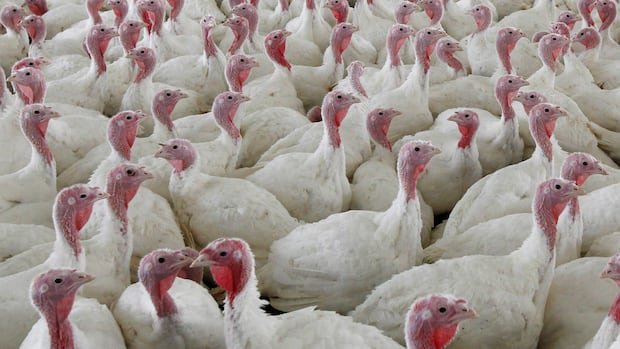

The Canadian Food Inspection Agency (CFIA) has reported new cases of avian influenza in the Strathroy area of Ontario, bringing the total number of outbreaks declared in the past two weeks to four. The latest outbreak was discovered on Friday when highly pathogenic avian influenza (HPAI) was confirmed at a commercial poultry farm in the region, as stated on the CFIA website. The exact number of birds affected by this recent outbreak is still unknown.
This discovery follows an outbreak declared on Wednesday, impacting at least 15,469 turkeys, according to the CFIA. The affected farm’s name and precise location were not disclosed in that instance, but it was approximately five kilometers away from the two farms affected in outbreaks earlier in the week and the preceding week. Those two prior outbreaks affected around 32,000 and 15,600 turkeys, respectively, totaling at least 63,069 affected birds when combined with the most recent outbreak on Friday.
The CFIA announced that all affected birds will be humanely eliminated and disposed of in compliance with provincial regulations, emphasizing that no singular source has been identified. These four outbreaks constitute the only active avian influenza incidents in Ontario currently.
To prevent further spread, the CFIA has established two primary control zones, PCZ-302 and PCZ-308, covering a significant portion of Strathroy-Caradoc, as well as parts of Adelaide Metcalfe, Chippewas of the Thames First Nation, Middlesex Centre, and Southwest Middlesex. Movement within or through these zones requires a permit for transporting birds, products, or by-products, with the potential revocation of the control zones once the disease is eradicated from the area.
Various poultry associations were contacted for comments, directing inquiries to the Feather Board Command Centre (FBCC), which oversees the Ontario poultry industry’s disease response. Maggy Watson-Sparks, FBCC’s general manager, emphasized that HPAI is primarily a flock health issue rather than a food safety concern, highlighting collaboration with the CFIA and provincial boards to safeguard bird health.
Factors contributing to avian flu presence include wild bird migration, particularly during migratory periods, heightening the risk for domestic poultry. The predominant strain, H5N1, is highly contagious and can swiftly spread among domestic bird populations. Strict biosecurity measures are crucial to prevent transmission, including avoiding contact with infected wild birds’ waste on farms.
While H5N1 can rarely affect humans, transmission typically results from close contact with infected birds or contaminated environments, such as farmworkers. Despite no human-to-human transmission observed, minimizing spread between wild and domestic birds remains critical. Strathroy-Caradoc hosts major poultry processing firms like Burnbrae Farms and Cuddy Farms, with Burnbrae Farms confirming that none of the farms supplying eggs to their grading station in Strathroy were impacted by avian influenza.
Previous outbreaks of avian influenza in the London area, including recent incidents in Middlesex Centre and North Middlesex, underscore the ongoing challenges posed by the disease. Across Canada, a total of 615 outbreaks have been recorded since early 2022, affecting approximately 16.6 million birds.