

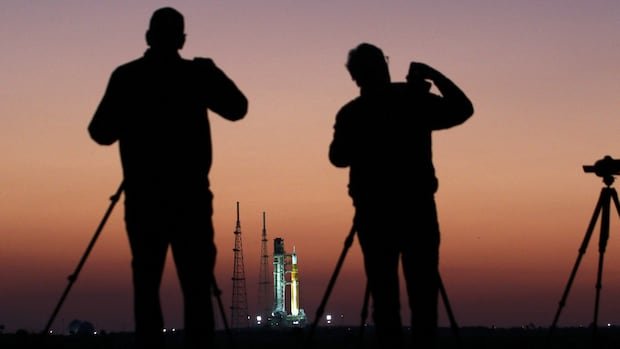

Artemis II is gearing up for its upcoming journey around the moon and back, marking a significant milestone in human space exploration. The mission will see four crew members, including Canadian Space Agency astronaut Jeremy Hansen and NASA astronauts Reid Wiseman, Victor Glover, and Christina Koch, embarking on this extraordinary adventure aboard the Space Launch System (SLS) rocket and within the Orion spacecraft. The launch is scheduled to take place from Launch Pad 39B at the Kennedy Space Center in Florida.
The mission schedule presents a few challenges due to various factors such as risk assessment, system checks, and weather conditions. Previous launch attempts in February and March were postponed due to hydrogen and helium issues. However, NASA is currently indicating an 80% likelihood of a successful launch on April 1. To achieve the required orbital trajectory for the moon journey, the launch needs to occur at night, which is optimal for East Coast observers.
The primary launch window is set for Wednesday, April 1, between 6:24 p.m. and 8:24 p.m. ET. In the event of a scrubbed launch, subsequent opportunities are available every night from Thursday, April 2, to Monday, April 6. NASA has detailed the critical countdown moments leading up to liftoff for those interested in the technical aspects.
For those eager to follow the mission closely, CBC News will provide comprehensive coverage across radio, TV, and digital platforms. Correspondents like Nicole Mortillaro, Paul Hunter, and Karen Pauls will be stationed at the Kennedy Space Center to offer real-time updates and insights. Online coverage will commence two hours before the launch on CBCNews.ca, featuring a live stream of the event and detailed reports on the mission’s progress.
The Artemis II mission aims to test essential systems and astronaut responses during the lunar journey without landing on the moon. Originally planned as a precursor to the Artemis III lunar landing in 2028, recent adjustments by NASA have shifted the mission’s focus. The Artemis missions are part of NASA’s strategy to establish a sustained human presence on the moon, fostering scientific exploration and economic activities to pave the way for future Mars missions.
The urgency to accelerate space exploration efforts stems from the desire to regain leadership in space endeavors and counter the advancements made by other countries, such as China, in lunar exploration. With Artemis II set to last around 10 days before returning to Earth, it represents a crucial step towards NASA’s ambitious goals in space exploration.