

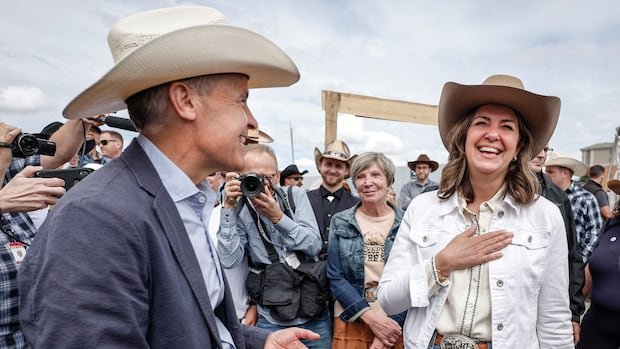

The Alberta and federal governments are currently engaged in discussions to finalize a significant agreement aimed at reshaping their interactions. Both parties are striving to formalize a memorandum of understanding (MOU) before the upcoming Canadian Football League’s Grey Cup on November 16.
The historical relationship between the federal government and the province has been strained for an extended period, turning particularly contentious over the past decade. Previous Alberta administrations have attributed the deteriorating relations to various policies introduced by Prime Minister Justin Trudeau, such as alterations to impact assessment legislation, a ban on oil tankers along British Columbia’s northern coast, net-zero electricity regulations, and proposed regulations for an oil and gas emissions cap.
Negotiations between the Alberta premier’s office and a senior federal government source are progressing with the objective of reaching an agreement to reset their relationship. These discussions are deemed crucial, prompting caution from ministers and sources to refrain from public comments that could jeopardize the ongoing talks.
Despite their usual prompt reactions to federal climate policy announcements, Alberta Premier Danielle Smith and Environment Minister Rebecca Schulz maintained a reserved stance following the unveiling of the Carney government’s climate strategy in the budget. The Climate Competitiveness Strategy, which retained certain emissions-reduction policies that have provoked Alberta’s ire, notably highlighted enhanced methane regulations and clean electricity regulations.
While the strategy did not outright commit to abolishing the oil and gas emissions cap, it outlined conditions that, if fulfilled, could render the contentious policy unnecessary. Alberta Premier Smith expressed restraint in passing judgment until the conclusion of negotiations with the Carney government in mid-November, emphasizing the need for a serious reconsideration of policies that have negatively impacted Alberta’s economy.
A spokesperson for Smith referred to a prior statement where the premier emphasized ongoing efforts to secure an agreement with the federal government that addresses Alberta’s objections to federal climate policies. Additionally, the Alberta government is progressing as the primary proponent of a bitumen pipeline project to British Columbia’s northern coast, intending to submit an application through the federal Major Projects Office.
Shannon Joseph, an advocate based in Calgary, sees the potential November agreement as a signal of a fresh era, highlighting the alignment between Premier Smith and Prime Minister Mark Carney in promoting investment and positioning Canada as an energy powerhouse. However, Oliver Anderson, a former collaborator of the federal environment and climate change minister, remains skeptical about the likelihood of a breakthrough, citing Alberta’s historical opposition to federal clean energy policies as a potential obstacle to genuine negotiations.
If successful, a positive outcome in the negotiations would mark a significant milestone for both levels of government, paving the way for improved collaboration after years of conflict. The prospect of a “grand bargain,” as mentioned by Premier Smith following discussions with Carney, remains a hopeful vision for the future relationship between Alberta and the federal government.