

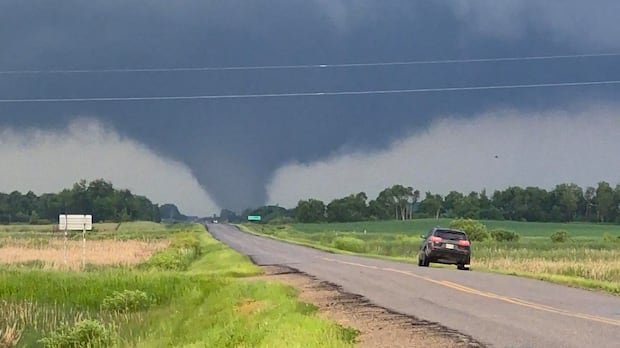

Federal budget cuts to a weather radar research team are expected to hinder weather forecasters’ ability to detect approaching tornadoes, as highlighted by a University of Manitoba atmospheric science professor. Despite a previous investment of $180 million by the federal government a decade ago to install 33 advanced weather radar systems throughout Canada, recent events, such as a tornado striking a Winnipeg neighborhood without prior warning, underscore the limitations caused by outdated software and algorithms used for radar data analysis.
The disbanding of a specialized team responsible for radar research within Environment and Climate Change Canada has raised concerns among experts, including John Hanesiak from the University of Manitoba, who emphasize the necessity of software and algorithm enhancements to maximize the potential of the national weather radar network. Efforts to address these deficiencies are at risk due to the absence of the dedicated research team.
Addressing these issues is crucial for minimizing casualties and property damage caused by severe weather events. A letter penned by Hanesiak and eight other weather researchers to Minister Julie Dabrusin in April voiced apprehensions about the implications of disbanding the radar research group.
In response to queries about the radar system’s failure to issue alerts ahead of recent tornadoes, Winnipeg city councilor Janice Lukes emphasized the importance of timely warnings for public safety. Despite several tornado warnings issued earlier in the month due to severe weather conditions, residents were caught off guard by the tornado that hit Whyte Ridge without any prior alert.
Recognized as the official source of weather alerts in Canada, Environment and Climate Change Canada plays a crucial role in disseminating warnings through the Alert Ready system. Lukes revealed receiving numerous inquiries from constituents demanding explanations for the lack of alerts during the recent tornado incidents.
Hanesiak stressed the urgent need for software and algorithm upgrades to effectively utilize the new weather radar systems across the country. He highlighted that the current technology is inadequate for maximizing the potential of the advanced radar systems, ultimately affecting the forecasters’ ability to predict severe weather accurately.
Efforts to enhance the software and algorithms are deemed essential for empowering forecasters with the necessary tools to interpret data effectively. Despite assurances from the federal government regarding the maintenance of the radar network, concerns persist about the efficiency of the existing system in providing accurate and timely weather forecasts.