


In April, Canadian astronaut Jeremy Hansen made history by traveling farther into space than any human before during the Artemis II mission, which circled the moon with three other NASA astronauts. This mission marks a significant step towards NASA’s goal of sending humans back to the lunar surface by 2028 with the Artemis IV mission.
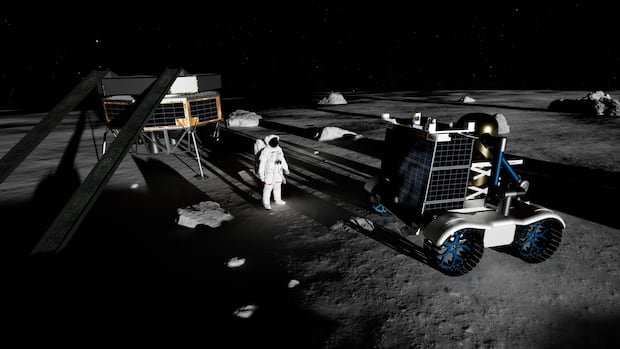
Unlike the Apollo program of the 1960s and ’70s, NASA’s Artemis program is an international collaboration involving 68 countries that have signed the Artemis Accords. The plan is not just for a brief visit to the moon but for a sustained human presence, requiring infrastructure such as construction vehicles, transportation vehicles, surveillance cameras, and power sources.
Canada is actively contributing to the mission to return humans to the moon. Although the Canadian Space Agency canceled a small lunar rover project in March, plans are underway for a larger lunar utility vehicle, with three Canadian companies – MDA Space, Canadensys Aerospace, and Mission Control – competing for the final contract.
Recently, NASA announced the Moon Base project near the lunar south pole, replacing the previous Lunar Gateway space station concept. The construction will occur in three phases, with commercial companies partnering with NASA to provide lunar rovers and landers. This shift in timeline may prompt adjustments in the lunar utility vehicle development.
Canadensys, a Canadian company, has a track record of contributing lunar exploration technology and cameras to international missions, including Firefly Aerospace’s Blue Ghost lunar lander mission in March 2025. Mission Control, another Canadian company involved in lunar utility vehicle development, emphasizes Canada’s strong position in space robotics technology.
Addressing the need for power on a lunar base, the Canadian Strategic Missions Corporation (CSMC) received funding from the Canadian Space Agency to develop a low-enriched uranium nuclear reactor for lunar use. This technology, crucial for sustained lunar operations, could also have applications on Earth, particularly in remote areas.
Canadian companies are exploring various opportunities on the moon, including mining and robotics. MDA Space, known for the Canadarm, is well-positioned in robotics technology. With the momentum from Jeremy Hansen’s mission, Canada has a unique chance to make significant contributions to lunar exploration and should capitalize on this opportunity.