

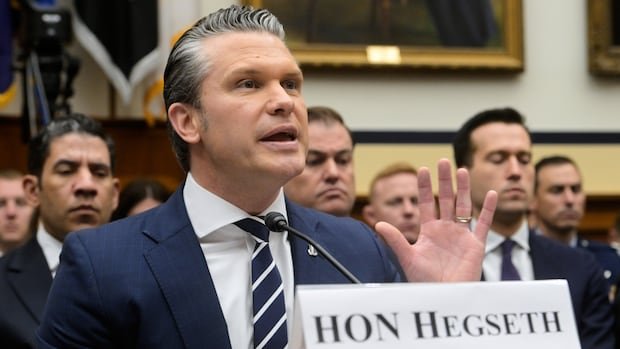

U.S. Secretary of War Pete Hegseth encountered tough questioning from doubtful Democrats in his recent appearance before Congress, marking the first time since the Trump administration engaged in conflict with Iran without congressional approval. The war has already amassed a bill of $25 billion, as per Pentagon figures disclosed to the House armed services committee during a heated session primarily centered on the administration’s proposed 2027 military budget of $1.5 trillion.
While Republicans concentrated on military budget intricacies and expressed backing for the operation, Democrats swiftly shifted focus at the hearing to the escalating war costs, significant depletion of vital U.S. munitions, and the tragic bombing of a school resulting in child casualties.
During a tense moment, Hegseth surprised Democratic Rep. Adam Smith by claiming that Iran’s nuclear sites were completely destroyed in a 2025 U.S. attack, leading Smith to question the rationale behind commencing the Iran war shortly thereafter. Hegseth defended the war by highlighting Iran’s continued nuclear ambitions and missile stockpiles.
Acting undersecretary of war for finances, Jules Hurst III, disclosed the estimated war cost to Smith, emphasizing substantial expenditures on munitions, operation expenses for Epic Fury (the U.S. side of the war), and equipment replacements.
Accusations flew from Democrats towards Hegseth for alleged mismanagement and deception regarding the conflict’s justifications, with concerns raised about escalating gas prices impacting the American populace. The war’s impact was labeled as a “geopolitical calamity” and a “strategic blunder.”
Amidst the debate, Republican Rep. Don Bacon expressed bipartisan unease over personnel changes at the Pentagon, indicating a potential rift despite recognizing Hegseth’s authority for such decisions. The ongoing conflict faces a critical juncture as a deadline under the War Powers Act approaches, with Democrats eyeing the need for congressional authorization for any extension.
As the situation unfolds, both parties grapple with the complexities of the war’s implications and the looming decision-making processes ahead, with the potential for extended conflict posing challenges and uncertainties on multiple fronts.