

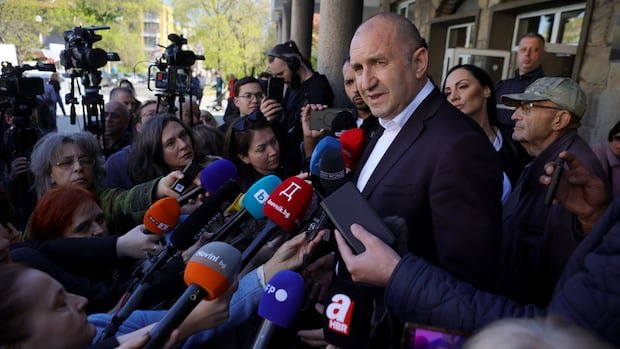

Pro-Russian ex-president Rumen Radev is on track for a decisive win in Bulgaria’s election, as per official results, signaling a potential end to years of fragile coalitions and sidelining traditional political powers. Surpassing expectations, Radev’s Progressive Bulgaria party secured 44.6% of the vote with 60% of ballots counted, possibly leading to a strong minority government. However, Radev has not ruled out forming a coalition with a pro-European faction or a smaller party.
Progressive Bulgaria’s significant lead over the pro-European We Continue the Change-Democratic Bulgaria coalition at 14.2% and the long-standing GERB party at 13% suggests a notable shift in the political landscape. Radev, a Eurosceptic and former pilot, resigned from the presidency in January to contest the parliamentary election following mass protests that ousted the previous government in December.
The victory marks a turning point driven by hope, freedom, and morality, as stated by Radev in a press conference. Fueled by public frustration with political instability and corruption in the country, voters expressed a desire for change away from entrenched parties dominating the political scene. The election outcome presents an opportunity for tangible transformations, according to Evelina Koleva, a Sofia-based digital marketing company manager.
Radev’s campaign echoes similarities with Hungary’s Viktor Orban, emphasizing improved relations with Moscow, resuming Russian energy imports, and criticizing the EU’s renewable energy reliance. While Radev’s foreign policy stance remains ambiguous, he expressed a willingness to collaborate on judicial reforms with PP-DB and affirmed Bulgaria’s commitment to its European trajectory.
Bulgaria’s socio-economic progress since its EU accession in 2007 has been notable, with rising life expectancy, low unemployment rates, and strengthened economic stability post Euro adoption. Despite these advancements, Bulgaria lags behind other EU nations in various aspects. The country faced public discontent over the rising cost of living, leading to protests against proposed tax hikes and increased social security contributions that triggered the previous government’s downfall.